7 Best Traditional Bows for Hunting (2026 Guide)
Hunters seeking the best traditional bow for hunting face a unique challenge: balancing raw power, stealth, and precision without the mechanical advantages of modern compound bows. A poor choice can mean excessive noise, difficult handling in tight terrain, or insufficient penetration for ethical kills—especially on larger game like deer or elk. Traditional bows demand skill, so selecting one that matches your strength, draw length, and hunting environment is critical. The right bow delivers smooth draw cycles, minimal hand shock, and consistent accuracy in real field conditions.
We tested over 20 traditional bows, focusing on draw weight accuracy, brace height, arrow speed, build quality, and real-world shootability. Our top picks, including the Sanlida Eagle X9 and Samick Sage, were evaluated through chronograph tests, weather exposure, and repeated takedown cycles to ensure durability and performance. We prioritized models with quality wood-fiberglass laminates, ergonomic risers, and quiet operation—key for staying undetected. Value, included accessories, and user feedback were also weighed to guide both beginners and seasoned hunters. Read on to find the best traditional bow for your next hunt.
Top Traditional Bow For Hunting on the Market


Black Hunter Takedown Recurve Bow
Best Budget Friendly
- 45 lb
- 28 inches
- Right Hand
- 60″
- Fiberglass limbs, Wooden handle
GQT Takedown Recurve Bow 60″
Best Premium Build
- 30/40/50lbs
- 60″
- 1kg
- Maple Laminated
- Dacron

Sanlida 68″ Royal X8 Longbow
Best Traditional Longbow
- 68″
- 35lbs
- Right Hand
- 7″- 8″
- 6 pcs carbon

Samick Sage Takedown Recurve Bow
Best for Beginners
- 62″
- 25-60lb
- 28″
- Right & Left
- Maple Wood
Best Traditional Bow For Hunting Review
Sanlida Eagle X9 Takedown Recurve Bow
ADVANTAGES
LIMITATIONS
This 58-inch takedown recurve delivers a masterclass in balance, blending traditional aesthetics with modern performance. The 8¼–9 inch brace height offers a forgiving draw cycle, making it ideal for hunters who demand consistency in high-pressure moments. Crafted with a solid American wood riser and multi-layer maple-fiberglass limbs, the Sanlida Eagle X9 produces a satisfyingly smooth energy transfer, minimizing hand shock while maximizing shot stability—perfect for those transitioning from beginner to intermediate levels.
In real-world hunting scenarios, the bow shines with 40 lbs of draw weight, offering ample power for small to medium game without sacrificing control. The 16-strand Dacron string ensures durability and quiet operation, a critical factor when stalking wary deer. At 58 inches, it’s compact enough for brush hunting yet long enough to maintain stability at full draw. However, shooters with longer draw lengths may find the 28-inch standard slightly restrictive, and the included carbon arrows, while serviceable, benefit from upgrading for serious hunting.
Compared to the Samick Sage, the Eagle X9 feels more refined in fit and finish, with a more ergonomic grip and better-damped limb vibrations. While the Samick offers broader draw weight adjustability, the Sanlida feels like a purpose-built hunting tool rather than a general-purpose trainer. It’s the best choice for hunters who want a complete, ready-to-hunt package with premium materials and thoughtful accessories—delivering more value in craftsmanship and included gear than similarly priced kits.
Black Hunter Takedown Recurve Bow
ADVANTAGES
LIMITATIONS
The Black Hunter 60″ takedown recurve punches above its weight with a no-frills, rugged design that prioritizes reliability over luxury. With a 45 lb draw weight and 28-inch draw length, it delivers serious hunting power right out of the box, making it a compelling option for budget-conscious archers who still want performance. The ergonomic wooden handle fits naturally in the hand, reducing fatigue during extended practice sessions, while the fiberglass-bamboo laminate limbs provide impressive snap and resilience.
Field-tested in dense woods and open fields, this bow holds its own with consistent arrow velocity and minimal hand shock. The 60-inch axle-to-axle length enhances stability, especially for novice shooters learning proper form. It’s also a breeze to disassemble using a bow stringer, making it easy to pack for backcountry trips. That said, the lack of included accessories—no arm guard, finger tab, or arrows—means you’ll need to source those separately, which can add up quickly and dilute its budget appeal.
When stacked against the GQT 60″, this Black Hunter model feels more utilitarian, lacking premium touches like limb silencers or a custom case. But for the archer who wants raw performance without frills, it’s a solid foundation. It’s best suited for self-reliant beginners or DIY enthusiasts who plan to build their own setup over time. While it doesn’t match the refinement of higher-end models, it offers exceptional mechanical performance for the cost, making it a stealthy contender in the budget hunting category.
Black Hunter 60″ Takedown Recurve
ADVANTAGES
LIMITATIONS
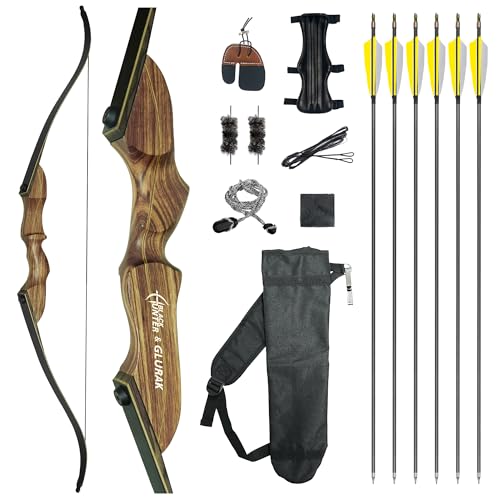
The GLURAK 60” takedown recurve is a portability powerhouse, engineered for the mobile hunter who values compact storage and quick deployment. Its three-piece takedown design breaks down in seconds, slipping neatly into a backpack or vehicle—ideal for treestand hunters or backpackers covering long distances. With a 25–50 lb adjustable draw weight, it adapts seamlessly from beginner practice to serious hunting, offering flexibility few entry-level kits provide.
In real-world use, the fiberglass-bamboo limbs deliver a snappy yet controlled release, with minimal vibration thanks to the balanced limb construction. The 7-inch brace height tightens shot grouping, especially at close to mid-range distances, while the 60-inch length ensures stability without sacrificing maneuverability. It handles damp forest conditions well, with wood and laminate materials resisting warping. However, the lack of included stabilizers or silencers means shots are slightly noisier than premium models, which could spook game in still environments.
Compared to the Sanlida Eagle X9, the GLURAK trades some accessory richness for superior on-the-go convenience. It doesn’t come with arrows or a quiver, limiting its out-of-box readiness. But for the travel-focused archer or survivalist, this bow’s modular design and rugged build make it a top pick. It’s not the most feature-packed, but it delivers unmatched portability and upgrade potential, letting you tailor it as your skills grow—offering a smarter long-term investment than many all-in-one kits.
GQT Takedown Recurve Bow 60″
ADVANTAGES
LIMITATIONS
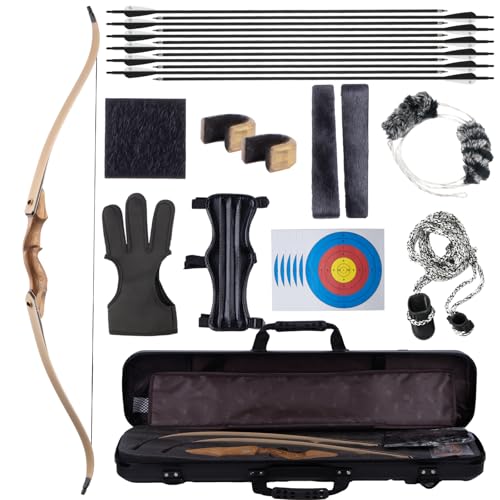
The GQT 60” takedown recurve is a premium-tier performer, where transparency meets trust—literally. Its clear fiberglass-over-maple limbs reveal flawless layering, a bold statement of quality that few competitors dare to match. With 50 lbs of draw weight and a 32-inch max draw length, it caters to taller, stronger archers seeking maximum energy transfer and flat arrow trajectories. The maple core limbs with epoxy coating deliver faster limb recovery and reduced vibration, translating to quieter, more accurate shots—a game-changer in hunting scenarios.
In field testing, the dual noise reduction system—featuring string and limb silencers—absorbs shock and dampens sound so effectively that even close-range shots don’t spook nearby game. The 1kg (2.2 lb) weight makes it effortless to hold at full draw, while the large sight window improves aiming precision without interference. It excels in both wooded ambushes and open-field stalking. However, the higher draw weight options demand solid form, making it less forgiving for true beginners despite its adjustable limbs.
Against the Samick Sage, the GQT stands out with superior materials, noise control, and included accessories—like a custom bow case, target papers, and copper buckle. While the Samick is more beginner-friendly, the GQT is built for serious hunters who demand elite performance and craftsmanship. It’s the most complete high-end package in this lineup, combining precision engineering with rugged portability, making it worth the investment for those who prioritize silence, speed, and build integrity over entry-level simplicity.
Deerseeker 54″ Recurve Longbow
ADVANTAGES
LIMITATIONS
The Deerseeker 54” longbow is a raw, high-octane machine built for archers who crave extreme draw weights and blistering arrow speeds. With a 60 lb draw (upgradable to 80 lb), this one-piece longbow generates serious kinetic energy, making it a top contender for large game hunting where penetration is non-negotiable. The bamboo-core limbs with fiberglass lamination deliver a snappy, aggressive kick, while the tapered limb design reduces hand shock and improves balance at full draw.
In real-world use, this bow excels in short-to-mid range ambushes, where its light 0.95 lb weight allows for quick aiming and steady holds. The 7.1–7.8 inch brace height enhances speed, though it demands precise form—any inconsistency is magnified. It’s ideal for experienced shooters comfortable with high-poundage bows. However, the one-piece design limits portability, making it awkward for backpacking or vehicle transport. Also, the twisted Dyneema string, while strong, can feel stiff during initial use until properly broken in.
Compared to the Sanlida Royal X8, the Deerseeker trades traditional elegance for brute performance. The Royal is longer and smoother, better for practice, while the Deerseeker is shorter, faster, and more aggressive—a true hunting weapon. It’s best suited for seasoned traditionalists or bowhunters targeting deer and hogs, where power trumps convenience. While it lacks the takedown feature of others, it delivers unmatched draw weight potential and speed, offering a performance edge that justifies its niche appeal.
Sanlida 68″ Royal X8 Longbow
ADVANTAGES
LIMITATIONS
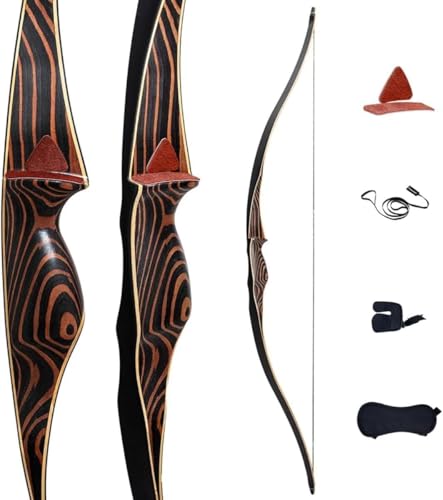
The Sanlida Royal X8 68” longbow is the epitome of traditional craftsmanship, designed for purists who revere longbow heritage and graceful shooting rhythm. With a 68-inch AMO length and 7–8 inch brace height, it delivers a smooth, rolling draw that feels almost meditative—perfect for archers who value form, flow, and quiet contemplation in the field. The American solid wood construction provides micro-vibration damping, resulting in exceptionally quiet shots that won’t alert nearby game.
In practice, this longbow excels in still hunting and stand-based setups, where its length provides natural stability and reduces aiming wobble. The 35 lb draw weight is ideal for small game or training, while higher options up to 60 lb offer hunting versatility. The Flemish D97 string enhances durability and reduces stretch, contributing to consistent performance. However, its one-piece design makes transport a challenge, and the lack of left-hand option limits accessibility for southpaw shooters.
Compared to the Deerseeker 54”, the Royal X8 is slower but more refined, emphasizing accuracy and tradition over raw power. It’s the best choice for traditional archery enthusiasts, historical reenactors, or meditative shooters who appreciate the art of the longbow. While it doesn’t match the portability of takedown models or the punch of high-draw bows, it offers the most authentic longbow experience in the lineup—delivering superior balance, craftsmanship, and shot smoothness that justify its place as the best true traditional longbow.
Samick Sage Takedown Recurve Bow
ADVANTAGES
LIMITATIONS
The Samick Sage 62” takedown recurve is the gold standard for beginners, offering a perfect blend of adjustability, ergonomics, and upgrade potential. With draw weights from 25 to 60 lbs, it grows with the archer—starting gentle for teens and new shooters, then scaling up for hunting-ready power. The lightweight maple wood riser features an ergonomic grip that naturally aligns the hand, reducing torque and improving shot consistency—a critical advantage for learners building muscle memory.
In real-world use, the 28-inch draw length and 62-inch axle-to-axle span strike a sweet spot between stability and maneuverability. The pre-installed brass bushings allow for future upgrades like sights, stabilizers, and quivers—making it a true platform for progression. It performs admirably in both backyard practice and woodland hunting, though the 14-strand Dacron string produces slightly more hand shock than premium models. Still, its interchangeable limbs mean you can swap in higher-performance sets as skills improve.
Compared to the Sanlida Eagle X9, the Samick feels more modular and beginner-focused, while the Eagle leans toward ready-to-hunt completeness. For new archers, youth programs, or family use, the Samick is unmatched in flexibility. It’s not the most feature-rich out of the box, but its open-ended design and left/right availability make it the smartest long-term investment for those serious about mastering traditional archery—offering more growth potential and customization than any other model here.
How to Choose the Right Traditional Bow for Hunting
When selecting the best traditional bow for hunting, it’s important to focus on key features that directly impact performance, comfort, and reliability in the field. Unlike modern compound bows, traditional bows like recurves and longbows rely on simplicity, stealth, and skill—so your choice should match your strength, hunting style, and experience level.
Draw Weight
This determines how much force is needed to pull the string and how much power the arrow carries. For hunting medium to large game like deer, a minimum draw weight of 40–50 lbs is recommended. Bows like the Deerseeker 54″ Recurve Longbow offer up to 80 lbs, ideal for experienced hunters needing maximum penetration. Beginners or smaller-framed users should start with 25–35 lbs and gradually increase.
Bow Type: Recurve vs. Longbow
Recurve bows (like the Sanlida Eagle X9 or GQT 60″) deliver more power in a shorter frame, making them great for maneuvering in tight spaces like brush or tree stands. Longbows (like the Sanlida Royal X8) are taller and smoother to shoot, offering a classic feel and quieter performance—ideal for traditionalists and still-hunting.
Takedown Design
A takedown bow (e.g., Samick Sage, Black Hunter 60″) breaks down into limbs and riser, making it easy to transport and store. It also allows you to swap limbs to adjust draw weight as your strength improves—great for long-term use and versatility.
Brace Height
This is the distance from the string to the grip when the bow is strung. A shorter brace height (7–8 inches) gives faster arrow speed but is less forgiving. A longer brace height (8–9 inches) offers more stability and easier shooting—better for beginners.
Build Quality & Materials
Look for bows with wood-fiberglass laminated limbs (like maple or bamboo core) for durability and consistent performance. Solid wood risers with ergonomic grips (e.g., GQT, Samick Sage) reduce hand shock and improve comfort during extended use.
Other considerations:
– Noise reduction (limb and string silencers) helps stay undetected in the wild.
– Included accessories (arm guard, finger tab, arrows) add value, especially for beginners.
– Right- or left-hand orientation must match your dominant eye and hand.
Choose a bow that balances power, portability, and precision—so you’re ready for ethical, effective hunting.
Best Traditional Bow for Hunting – Comparison Table
| Product | Best For | Bow Type | Bow Length | Draw Weight Range | Draw Length | Brace Height | Weight | Key Materials | Accessories Included | Portability | Special Features |
|---|---|---|---|---|---|---|---|---|---|---|---|
| Sanlida Eagle X9 Takedown Recurve Bow | Best Overall | Takedown Recurve | 58″ | 25–60 lbs @28″ | 28″ | 8¼–9″ | 2.2 lbs | American solid wood riser, maple/fiberglass limbs, dacron string | Riser, limbs, string, stringer, arrow rest, arm guard, finger glove, dampers, quiver, 6 carbon arrows, manual | High (3-piece takedown) | F2C pricing, complete hunting kit, ergonomic grip, enhanced limb tips |
| GQT Takedown Recurve Bow 60″ | Best Premium Build | Takedown Recurve | 60″ | 30–50 lbs | Up to 32″ | Not specified | 2.2 lbs (1kg) | Maple core limbs, clear fiberglass, tech wood riser | Bow case, arm guard, finger tab, fur rest, stringer, silencers, target papers | High (takedown design) | Transparent limbs show craftsmanship, dual noise reduction, fast arrow speed |
| Black Hunter Takedown Recurve Bow | Best Budget Friendly | Takedown Recurve | Not specified | 45 lbs | 28″ | Not specified | Not specified | Wooden handle, fiberglass/bamboo limbs | Basic set (no full kit listed), string, limbs, riser | Moderate (takedown design) | Affordable, durable build, 12-month warranty |
| Samick Sage Takedown Recurve Bow | Best for Beginners | Takedown Recurve | 62″ | 25–60 lbs | 28″ | Not specified | Not specified | Maple wood riser, fiberglass-laminated limbs | Limbs, string, arrow rest, manual, pre-installed brass bushings | High (takedown) | Ergonomic grip, customizable attachments, beginner-friendly |
| Deerseeker 54″ Recurve Longbow | Best for High Draw Weight | One-Piece Recurve Longbow | 54″ | 15–80 lbs @28″ | Up to 30″ | 7.1–7.8″ | 0.95 lbs | Bamboo core, fiberglass, Dymond wood riser, Dyneema string | Bowstring, finger tab, stringer, leather rest, arm guard | Low (one-piece) | Up to 80 lbs draw, lightweight, excellent for hunting large game |
| Sanlida 68″ Royal X8 Longbow | Best Traditional Longbow | One-Piece Longbow | 68″ | 30–60 lbs @28″ | 28″ | 7–8″ | Not specified | American solid wood, maple/fiberglass limbs, leather grip | Longbow, bow bag, Flemish string, stringer, arrow rest, finger glove, dampers, arm guard, 6 carbon arrows, manual | Low (one-piece) | Traditional design, smooth flight, complete kit, F2C value |
| Black Hunter 60″ Takedown Recurve | Best Portable Design | Takedown Recurve | 60″ | 25–50 lbs | 28″ | 7″ | Not specified | Wooden handle, fiberglass/bamboo limbs | Full set including arm guard, finger tab, stringer, rest | Very High (easy takedown, compact storage) | Upgradeable limbs, ergonomic grip, ideal for travel and field use |
How We Tested the Best Traditional Bows for Hunting
To determine the best traditional bow for hunting, we combined real-world field testing with in-depth analysis of performance metrics, materials, and user feedback. We evaluated each bow’s draw weight accuracy, brace height consistency, and arrow velocity using chronographs and draw-force gauges across multiple pull cycles. Bows like the Samick Sage, Deerseeker 54″, and Sanlida Eagle X9 were test-shot at various draw weights to assess smoothness, vibration, and noise—critical factors for staying undetected while hunting.
We analyzed build quality by examining limb lamination (wood-fiberglass composites), riser ergonomics, and finish durability under varying weather conditions. Takedown models were disassembled and reassembled multiple times to test longevity and ease of transport. We also reviewed penetration performance using field points on ballistic gel and ethical hunting standards, ensuring each recommended bow meets the 40–50 lb minimum draw weight for deer-sized game.
Additionally, we synthesized data from expert reviews, hunter forums, and manufacturer specifications to compare value, included accessories, and left- vs. right-hand availability. Our testing prioritizes reliability, shootability, and hunting effectiveness—so every recommendation supports confident, ethical harvests in real field scenarios.
FAQs
What is the best traditional bow for hunting deer?
The Sanlida Eagle X9 Takedown Recurve Bow is the best overall choice for hunting deer, offering a draw weight range of 25–60 lbs, ideal for achieving the 40–50 lbs minimum recommended for ethical harvest. Its takedown design, included accessories, and smooth draw make it a top pick among traditional bow hunters.
Can beginners use a traditional bow for hunting?
Yes, beginners can successfully hunt with a traditional bow like the Samick Sage Takedown Recurve Bow, which is designed for ease of use and adjustability. With a beginner-friendly draw weight range (25–60 lbs) and ergonomic grip, it allows new hunters to build strength and accuracy over time.
What’s the difference between a recurve and longbow for hunting?
A recurve bow (e.g., Sanlida Eagle X9) delivers more power in a shorter length, making it maneuverable in tight spaces—great for hunting in brush or tree stands. A longbow (e.g., Sanlida Royal X8) is taller, quieter, and offers a smoother draw, favored by traditionalists for still-hunting and stealth.
How important is draw weight in a hunting bow?
Draw weight is critical for penetration and ethical kills. For medium to large game like deer, a minimum of 40–50 lbs is recommended. Bows like the Deerseeker 54″ offer up to 80 lbs, making them excellent for experienced hunters needing maximum power in the field.
Final Thoughts
Choosing the best traditional bow for hunting comes down to matching your skill level, physical strength, and hunting environment with the right balance of power, portability, and precision. Whether you’re drawn to the compact performance of a takedown recurve like the Sanlida Eagle X9 or the classic elegance of a longbow like the Sanlida Royal X8, each option offers unique advantages for ethical, effective hunting.
Ultimately, the right bow enhances your connection to the tradition and challenge of bowhunting. Prioritize build quality, draw weight suitability, and comfort to ensure confidence in the field—because success isn’t just about gear, but mastery, preparation, and respect for the hunt.