How to Use a Bow Press: Step-by-Step Guide
If you own a compound bow, knowing how to use a bow press is essential for maintenance, tuning, and repairs. Whether you’re replacing a frayed string, rotating a peep sight, or adjusting cam timing, a bow press safely reduces tension on the bowstring and cables by flexing the limbs. Without it, these tasks are nearly impossible or dangerously risky. But one wrong move can crack a limb, warp a cam, or even cause catastrophic failure.
This guide walks you through every step, safety rule, and pro tip so you can press your bow with confidence, precision, and zero guesswork. You’ll learn which press fits your bow, where to apply pressure, how to avoid common mistakes, and when to call a pro.
Choose the Right Bow Press

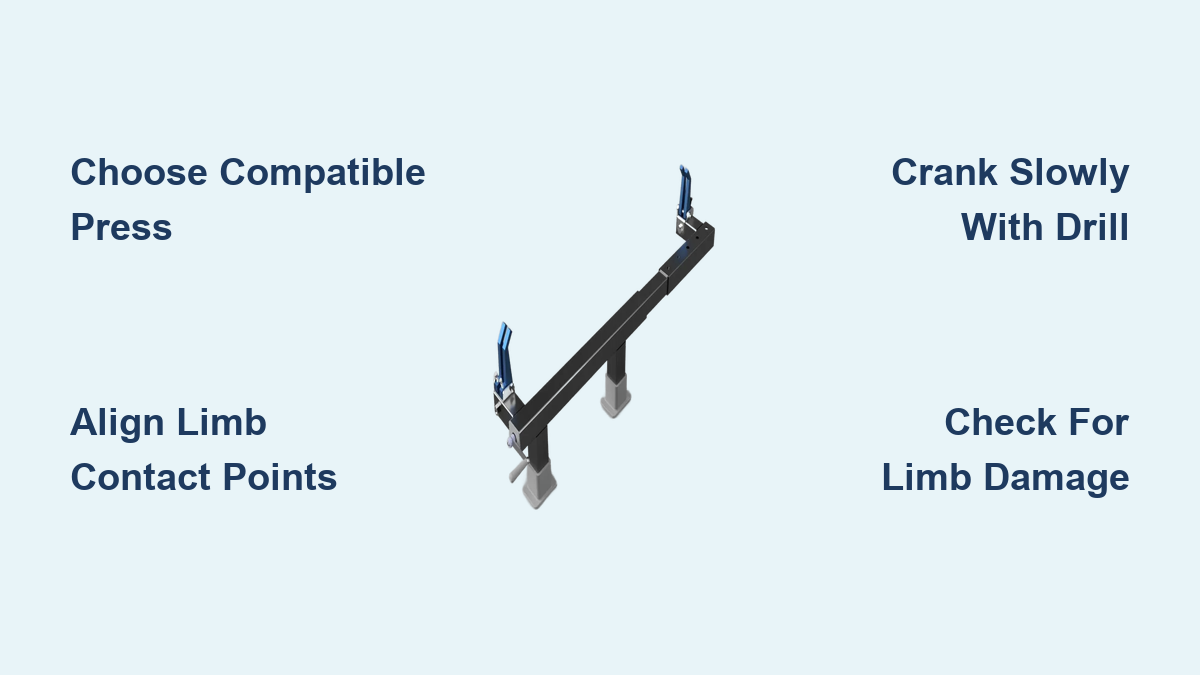
Not all presses work with all bows. Using the wrong one risks damage or injury. Match your press to your bow’s limb design and axle configuration.
Match Your Bow Type
Modern compound bows fall into two main categories: forward-limb and parallel/reverse-limb. Older models like the Bear Whitetail II have limbs that angle forward, while today’s high-performance bows like the BowTech Realm SR6 and Matthews Helium use parallel or reverse limbs for stability and speed.
• Forward-limb bows require vintage or fixed-arm presses like older Sherlock-style models.
• Parallel/reverse-limb bows need modern adjustable-peg, linear, or portable presses.
Warning: Never press a modern reverse-limb bow with an outdated press. You risk shattering the limb.
Select by Use Case
| Press Type | Best For | Limitations |
|---|---|---|
| Fixed-arm (X-Press) | Standard axle-to-axle bows | Less adaptable; requires precise alignment |
| Adjustable-peg (Easy Press) | Multiple bow models | Slightly more setup time |
| Linear press | Aggressive limb angles; pro shop use | Bulky; not portable |
| Portable (WCS, BowMaster) | Field repairs; hunters | Limited adjustability |
| Shop-grade | Full tuning, cam sync, draw length changes | Expensive; overkill for casual users |
Pro Tip: If you own multiple bows or plan long-term use, invest in an adjustable-peg or linear press. They adapt to most models and reduce long-term risk.
Check Press Compatibility First
Before attaching anything, confirm your press is compatible with your specific bow model.
Verify Limb Contact Zones
The press must contact the limb at its natural pivot point, the reinforced area near the limb pocket where it attaches to the riser.
Acceptable contact areas:
• Base of the limb (aligned with axle)
• Outer edge of the limb tip (for tip-style presses)
• Top third of the limb (Last Chance EZPress)
Never press on:
• The riser
• The cam or axle
• Cables, split yokes, or bushings
Warning: Pressing on the riser creates dangerous leverage that can crack it. Use your bow press to compress the limbs, not the riser.
Model-Specific Setup Tips
• BowTech Realm SR6: Use the second stop position on adjustable arms. The press must latch over the limb edge with the cable attached to the end of the arm.
• Matthews Helium: Can be pressed between the limbs, but only with proper brackets. Pressing too low risks limb damage.
• Prime bows with limb stops: Require shorter finger attachments to avoid damaging the stop mechanism.
Action Step: Consult your bow’s manual or contact the manufacturer if unsure. When in doubt, take it to a certified pro shop.
Set Up the Press Correctly
A misaligned press causes uneven loading, cam lean, and potential breakage. Take time to adjust it properly.
Adjust Arm Width and Stop Positions
- Expand the press arms slightly wider than your bow’s limb tips.
- Slide the metal stopping points to match your bow’s axle-to-axle length.
- Lock the arms securely.
Pro Tip: For the BowTech Realm SR6, use the second stop position, not the first or third.
Align Contact Points
• Position fingers or brackets over the reinforced base of the limb or top third (depending on press type).
• Angle the contact points to match the limb’s orientation. Don’t force them.
• Ensure both sides apply equal pressure to prevent twisting.
Visual cue: When correctly aligned, the limb should sit flush against the rubber roller or cup without tilting.
Install Brackets (If Required)
Some presses like the Easy Press use removable brackets.
- Attach the first bracket to one limb, routing the string through the slot.
- Secure the locking pin.
- Feed the press cable through the bracket (before or after attachment).
- Repeat on the opposite limb.
Warning: Misaligned brackets cause uneven stress. Double-check both sides before pressing.
Position the Bow in the Press
Stability is critical. A shifting bow can slip, twist, or snap under pressure.
Hold the Bow Horizontally
• Place the bow flat and level.
• Gently press one limb tip into the press fingers.
• Guide the second limb into place. Don’t force it.
• Ensure the bow sits centered and balanced.
Pro Tip: Use a bow holder with a clamp to keep it steady. A homemade cradle or commercial stand works well.
Warning: Never rely on hand-holding. Even slight movement can throw off alignment.
Confirm Clearance
• Check that cables, roller guards, and yokes are not touching press arms.
• Ensure no part of the riser is under pressure.
• Verify both limbs are engaged evenly.
If one side resists, stop. Recheck alignment before proceeding.
Apply Pressure Gradually

Rushing this step risks component failure. Go slow and watch for warning signs.
Use a Drill for Control
• Attach a 5/8-inch drill bit to the press’s screw end.
• Use a cordless drill on low speed for smooth, steady cranking.
• This reduces physical strain and prevents jerky motion.
Pro Tip: Drill-assisted pressing is recommended by pros and users alike.
Crank Until Tension Releases
• Turn slowly until the string and cables go slack.
• You do not need full compression. Just enough to remove tension.
• Most tasks require only 1 to 2 inches of arm movement.
Expert Note: When correctly set up, it should only take a few inches of movement to relieve string tension.
Watch for Red Flags
Stop immediately if you see:
• Limb twisting or cam leaning
• Excessive resistance requiring heavy cranking
• Unusual noises (cracking, popping)
• Misaligned cables or shifting parts
These indicate improper setup. Back off pressure and recheck alignment.
Perform Maintenance Safely
With tension gone, you can now access the string, cables, and cams.
Common Tasks You Can Do
• Replace or twist the bowstring
• Rotate or install a peep sight
• Repair or replace servings
• Adjust cam timing or synchronization
• Shim the cam for draw length or let-off changes
• Inspect roller guards and cables for wear
Before removing the bow, pull slight tension back on the string to verify:
• Cables are seated in cam tracks
• End loops are attached
• Roller guard systems have not loosened
Avoid These Mistakes
• Do not remove the string without full tension relief.
• Do not adjust draw length without proper tools.
• Do not leave cables unseated during reassembly.
Expert Note: Even experienced users sometimes forget to recheck cable seating, leading to poor performance or damage.
Release Pressure and Remove the Bow
Releasing too fast can cause limbs to snap back violently. Do it right.
Uncrank Slowly
• Reverse the drill or hand crank at the same controlled speed.
• Watch the limbs return smoothly to their resting position.
• Listen for any binding or resistance.
If the limbs do not return evenly, stop. Something is misaligned.
Remove the Bow Carefully
• Once fully released, lift the bow out gently.
• Inspect limbs, cams, and riser for signs of stress:
• Cracks
• Twisting
• Cam lean
• Loose axles
If anything looks off, do not shoot. Take it to a professional.
Follow Critical Safety Rules
A bow under tension stores immense energy. One mistake can destroy your bow or injure you.
Never Do These
• Press on the riser. This causes stress fractures and limb detachment.
• Press near the cam or axle. This risks cam damage or limb breakage.
• Use an incompatible press. This can lead to catastrophic failure.
• Leave a pressed bow unattended. There is risk of accidental release.
• Use body parts to stabilize. Never attempt to press a bow using your legs or other body parts.
Expert Note: One community member joked, “Do not attempt to remove bow with genitals.” Funny, but it underscores the danger of improvisation.
Always Wear Safety Gear
• Safety glasses. Protect eyes from snapping strings or flying debris.
• Gloves. Prevent cuts from sharp cable edges.
• Clear workspace. Keep bystanders and pets away.
Treat every press like a live firearm. Respect the stored energy.
Know When to Call a Pro
Even with the right tools, some jobs are best left to experts.
Tasks That Require a Pro Shop
• Full cam synchronization
• Draw length modification via module swap
• Yoke tuning on split-cam systems
• Limb replacement
• Diagnosing performance issues after pressing
Pro Tip: Shop-grade presses often include alignment lasers and sync tools, unavailable to most home users.
When You Are Unsure, Stop
If you are uncertain about compatibility, setup, or procedure:
• Pause
• Recheck the manual
• Watch a demo video (John Dudley’s Nocked and Ready to Rock series)
• Take it to a certified technician
It is cheaper to pay $20 for a string change than $400 for a new limb.
Maintain Your Bow Press
A well-cared-for press lasts for years, even with frequent use.
Clean and Lubricate Regularly
• Wipe down arms and brackets after each use.
• Lubricate threads and moving parts with light machine oil.
• Check rubber rollers and locking pins for wear.
• Store in a dry place to prevent rust.
Inspect before every use. Look for cracks, stripped threads, or loose hardware.
Replace Worn Parts
• Swap out damaged fingers or brackets.
• Upgrade to sturdier adapters if using multiple bow models.
• Keep spare pins and cables on hand.
A $5 replacement part saves a $500 bow.
Final Tips for Success
Using a bow press is not complicated, but it demands respect, precision, and patience.
Best Practices Recap
• Only press when necessary. Avoid unnecessary wear.
• Use drill-assisted cranking. This provides smooth, controlled pressure.
• Stabilize the bow with a clamp or stand.
• Double-check alignment before and during pressing.
• Work slowly. Speed kills accuracy and safety.
• Have a second person verify setup, especially when learning.
Bottom Line: A properly used bow press is safe and efficient. An improperly used one risks destroying your bow and potentially causing injury.
Frequently Asked Questions About Using a Bow Press
How often should I press my bow?
Only press when necessary for maintenance such as string replacement, peep sight adjustment, or tuning. Avoid unnecessary pressing, as it adds cumulative stress to components.
Can I use any bow press for my compound bow?
No. Always verify the press is rated for your specific bow model and limb configuration. Using an incompatible press risks limb fracture or catastrophic failure.
What is the biggest risk of incorrect bow pressing?
The biggest risks are limb failure, cam damage, or catastrophic bow failure, potentially leading to injury. An improperly pressed bow becomes a ticking time bomb of potential mechanical failure.
How can I tell if my bow was pressed incorrectly?
Look for visible limb twist, cam lean, cracked limbs, or sudden performance degradation. Difficulty reinserting axles is another warning sign.
Do I need a bow press for basic maintenance?
While minor tasks like nock tuning can be done without a press, most string and cam-related work requires a bow press. Professional string replacement services often exceed $20 to $30 per visit.
Should I use a drill to operate the press?
Yes. Drill-assisted cranking using a 5/8-inch bit is recommended for controlled, steady pressure and reduced physical strain. It prevents jerky motion and provides consistent results.
Key Takeaways for Using Your Bow Press
Mastering how to use a bow press puts you in control of your gear is performance, longevity, and safety. The most critical rules are: always press on the limbs at the natural pivot point (never the riser), verify compatibility before every use, and apply minimal, balanced pressure. Use drill-assisted cranking for control, stabilize your bow with a clamp, and never rush the process.
Whether you are swapping a string in the garage or prepping for hunting season, these skills protect your investment and keep your compound bow running smoothly for seasons to come. When in doubt, consult a professional. It is cheaper to pay for expert help than to replace damaged components.