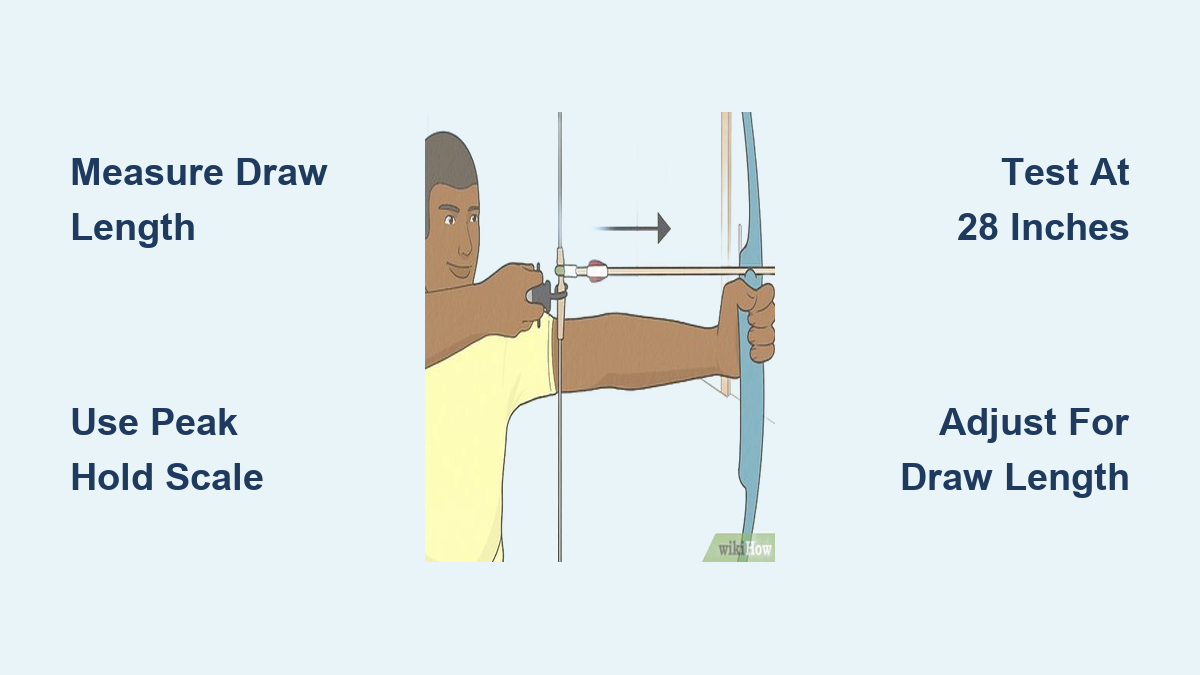
How to Check Bow Poundage: Quick Guide
If you have ever wondered whether your bow feels too heavy or too light, the answer lies in bow poundage—the force required to draw the string back. Knowing how to check bow poundage accurately is essential for safety, performance, and proper form. Whether you are a beginner or an experienced archer, understanding your bow’s actual draw weight ensures you are shooting efficiently and safely. This guide walks you through every step from measuring personal draw length to using the right tools and avoiding common mistakes.
Measure Personal Draw Length First
Before checking poundage, you must know your draw length. It directly affects how much force you actually pull when shooting.
Use the Wingspan Method
Stand with your back flat against a wall, arms stretched out horizontally, palms forward. Measure from the tip of one middle finger to the tip of the other. Divide that number by 2.5 to get your estimated draw length in inches.
Example:
85-inch wingspan ÷ 2.5 = 34-inch draw length
This quick method gives a reliable estimate used widely in archery shops and training programs. It is ideal for beginners who have not yet established a consistent shooting form.
Find Actual Shooting Draw Length
For greater accuracy, measure while shooting. At full draw and anchor point, measure from the nock groove on the string to the pivot point on the riser where the arrow rests. Add 1.5 to 1.75 inches to account for hand size and hook position.
This method reflects real-world conditions and accounts for individual technique differences that the wingspan method cannot capture.
Understand True Draw Weight at 28 Inches
Bow poundage is standardized at 28 inches, measured from 1¾ inches behind the grip’s deepest point.
Why 28 Inches Matters
The Archery Manufacturers and Merchants Organization (AMO) set this standard so bows can be compared fairly across brands. A bow labeled “40 lb at 28″” means it requires 40 pounds of force to pull the string to 28 inches from that reference point. Always use this same point when testing or comparing bows to ensure consistency.
Adjust for Your Draw Length
Draw weight changes with draw length at a rate of ±2.5 pounds per inch from the 28-inch standard.
Example:
– 30″ draw on a 40 lb (28″) bow: (30 – 28) × 2.5 = +5 lb → 45 lb effective draw weight
– 26″ draw on same bow: (26 – 28) × 2.5 = –5 lb → 35 lb effective draw weight
An archer with a 33″ draw pulling a 40 lb bow is actually shooting 52.5 lb, which is a massive difference from the stated rating. This is why personal draw length matters so much.
Choose the Right Rated Bow
To shoot at 30 lb with a 30″ draw, pick a 25 lb-rated bow because 25 lb + (2″ over × 2.5) = 30 lb effective. Match your physical draw length to the bow’s rating, not the label alone, to get the actual performance you expect.
Pick the Right Measurement Tool

Using the wrong scale leads to inaccurate results and potentially unsafe setups. Choose your tool carefully.
Use a Digital Bow Scale (Best Choice)
Digital bow scales with peak hold capture the maximum force during draw, which is critical for compound bows with let-off.
Features to look for:
– Accuracy: ±1 lb
– Capacity: Up to 110 lb
– Price: $8–$30
– Units: lb, kg, oz
Recommended models:
– X-Spot Digital Release Trigger Scale
– AHOSOUTLY Archery Bow Scale
– Archery Bow Scale with Peak & Hold Indicator
These scales retain the highest reading, so you do not miss peak draw weight even if it happens in a fraction of a second.
Try a Digital Luggage Scale (Budget Option)
Affordable scales cost roughly $5–$15 and are widely available, but only work if they have “peak” or “max hold” mode. Without peak memory, the scale shows only hold weight, which is dangerously misleading for compound bows.
User tip: Clip the scale to the string, draw slowly until it beeps and stabilizes—that is your true draw weight.
Warning: Never use a standard luggage scale without peak function because it will underreport draw weight significantly.
Avoid Bathroom Scales for Direct Pulling
Never compress an arrow straight onto a bathroom scale. The force can cause the arrow to explode, risking serious injury. One archer reported a wooden arrow detonating and nearly hitting his eye.
However, bathroom scales can work indirectly in lever-arm setups described later in this guide.
Test Draw Weight with Proven Methods
Use these reliable techniques to measure accurately and safely every time.
Use a Bow Scale on a Fixed Anchor
This method works best for all bow types and provides high accuracy.
Steps:
1. Set scale to pounds and enable peak hold.
2. Hook scale to the bowstring at the nock point.
3. Attach the other end to a ceiling hook, beam, or heavy door anchor.
4. Nock an arrow as a safety precaution.
5. Point bow toward a safe backstop and draw smoothly to full draw or 28″.
6. Read the peak value displayed on the scale.
7. Release slowly and never let go suddenly.
8. Repeat 2–3 times and average the results for accuracy.
Conduct tests indoors or in calm conditions to avoid wind interference with your measurements.
Try a Tillering Stick and Digital Scale
This method works best for recurve and traditional bows and provides excellent accuracy.
Equipment needed:
– Tillering stick with inch marks and yoke
– Flat digital scale (bathroom or shipping scale)
– Measuring tape
Steps:
1. Insert riser into tillering stick’s yoke.
2. Align the 26-inch mark with the deepest part of the grip.
3. Place setup on the scale and tare (zero) it.
4. Press down evenly on the string until the stick reads 28 inches.
5. Read the weight displayed—this is your draw weight at 28″.
This method excludes the bow’s own weight from the reading, giving you pure draw force.
User tip (Bjorn): “I clamp the bow to my tillering tree so only the pull force registers on the scale.”
Build a Lever Arm with a 2×4
This method works best for DIY users without access to a tillering stick.
Steps:
1. Place one end of a 2×4 or broom handle on a digital scale.
2. Hang the bowstring over the elevated end and carve a small groove to prevent slippage.
3. Push straight down on the riser until draw reaches 28 inches.
4. Record the scale reading.
5. Subtract the combined weight of the bow and 2×4, which you must weigh separately beforehand.
Some archers build a C-shaped cradle to reduce friction and improve precision. Accuracy is roughly ±2–3 lb, which is good for estimates but not competition tuning.
Handle Compound Bows Correctly

Compound bows behave differently from recurves due to let-off, a mechanical advantage that reduces holding weight after peak draw.
Know Peak vs. Hold Weight
- Peak weight equals draw weight, for example 60 lb
- Hold weight equals reduced weight at full draw, for example 15 lb
- Only peak weight matters for classification and safety rules
A 60 lb bow with 75% let-off holds at 15 lb, but its draw weight is still 60 lb. Never confuse these two numbers.
Capture Peak Pull Every Time
Standard scales without peak hold drop back to hold weight after let-off, giving dangerously false readings. You must have peak memory in your digital scale or a lockable dial in mechanical models to get accurate compound bow measurements.
User insight (LBR): “Many shop scales are old spring types that are often inaccurate. Always verify with your own equipment.”
Get Help from Archery Pros
If DIY measurement feels risky or unclear, professional help is available.
Visit an Archery Shop
Most full-service shops have professional draw weight testers, tillering trees, and calibrated scales. Staff can measure, adjust limb bolts, and verify your setup, often free of charge.
User note (Kevin Starr): “Most shops let you test before buying. Some leagues cap draw weight at 35 lb at 28″,” so confirm compliance before competing.
Join a Club or Range
Many archery clubs own scales and allow members to use them. This is ideal if you maintain multiple bows or want regular calibration checks. Clubs also provide community learning opportunities and troubleshooting help from experienced archers.
Ensure Accuracy and Consistency
Even small errors can skew results significantly. Follow these best practices for reliable measurements.
Calibrate Your Scale Regularly
Not all scales are accurate right out of the box. Test with known weights such as calibrated dumbbells. Compare readings across multiple scales and replace worn hooks or springs when needed.
User habit (Bjorn): Regularly checks scale accuracy with certified weights to ensure reliable results.
Eliminate Bow Weight Interference
When hanging the bow vertically, its own mass can affect readings. The best fix is to clamp the bow to a tillering tree and pull vertically downward so only string tension is measured, not the bow’s weight.
Stick to One Measurement Orientation
Debate exists over vertical vs. horizontal pulling methods. Gravity can affect readings, so stay consistent. Pick one method and use it every time for comparable results across multiple measurements.
Consider Advanced Factors
Hand size, finger placement, and shooting style influence real-world draw weight more than most people realize.
Account for Hand Size
Larger hands may anchor farther back, increasing effective draw length and thus draw weight. This is why some archers feel a bow is heavier than its label suggests. Hand size variations can make a significant difference in perceived poundage.
Use DLPP for Traditional Bows
Draw Length Past Point (DLPP) measures from a fixed point on the bow to the string at full draw using the archer’s actual hand. This provides personalized, real-world poundage readings and is popular among traditional shooters who want exact precision.
Follow Best Practices Summary
| Factor | Recommendation |
|---|---|
| Standard Draw Length | 28 inches from 1¾” behind grip center |
| Adjustment Rule | ±2.5 lb per inch of draw length difference |
| Top Tool | Digital bow scale with peak hold |
| Budget Pick | Digital luggage/fishing scale with peak mode |
| Avoid | Scales without peak hold; compressing arrows on scales |
| Safety Rule | Always nock an arrow during testing |
| Accuracy Tip | Repeat 2–3 times, average results |
| Calibration | Verify with known weights like dumbbells |
| Consistency | Use same tool, method, and reference point |
Maintain and Recheck Over Time
Draw weight is not permanent. Changes happen with equipment modifications and wear.
Recheck After Equipment Changes
- New string or cables can alter poundage slightly
- Limb bolt adjustments change tension significantly
- Tiller tuning affects balance and draw force
Always re-measure after any modification to keep your records accurate.
Store Scales Properly
Keep digital scales in a dry, temperature-stable place. Moisture and drops damage sensors and reduce accuracy over time. A $10 scale lasts years with proper care, paying for itself in safety and performance.
Use a Draw Board (Advanced Tip)
For precise, repeatable compound bow measurements, use a draw board, which is a jig that holds the bow steady while you draw it incrementally. This is beyond beginner scope but highly recommended for competitive shooters who need exact precision.
Key Takeaways for Checking Bow Poundage
Draw weight is not just a number on a limb. It is personal, dynamic, and critical to your success as an archer. A small investment in a $10 digital scale with peak hold gives you objective data, safer shooting, and better performance. Whether you are sizing a youth bow or tuning for hunting season, knowing how to check bow poundage puts you in control. Prioritize comfort, form, and gradual progression over raw power. With accurate measurement, you will shoot smarter, safer, and more effectively every time you step to the line.
Frequently Asked Questions About Checking Bow Poundage
What is bow poundage and why does it matter?
Bow poundage is the amount of force measured in pounds required to draw a bowstring to a specific length, typically 28 inches. It matters because it affects arrow speed, accuracy, shooting comfort, and safety. Using the wrong poundage leads to poor form, rapid fatigue, and potential injury.
How do I measure my personal draw length?
Measure your wingspan from fingertip to fingertip and divide by 2.5 for an estimate. For more accuracy, measure from the string’s nock point to the riser’s pivot point at full draw, then add 1.5 to 1.75 inches for hand size.
Can I use a regular bathroom scale to check bow poundage?
No, never compress an arrow directly on a bathroom scale because it can explode and cause serious injury. Bathroom scales only work indirectly in lever-arm setups where you push down on the bow while it rests on the scale.
Why is 28 inches the standard draw length?
The Archery Manufacturers and Merchants Organization (AMO) established 28 inches as the standard so bows can be compared fairly across all brands and models. This provides a consistent baseline for measuring and comparing draw weights.
How does draw length affect effective bow poundage?
Draw weight changes by approximately 2.5 pounds per inch from the standard 28 inches. A longer draw produces higher effective poundage, while a shorter draw produces lower effective poundage. This is why personal draw length measurement is essential for accurate setup.
What scale should I use for compound bows?
Use a digital bow scale with peak hold function. Compound bows have let-off, which reduces hold weight after peak draw. Without peak hold, standard scales show only the reduced hold weight, giving you a dangerously inaccurate reading.