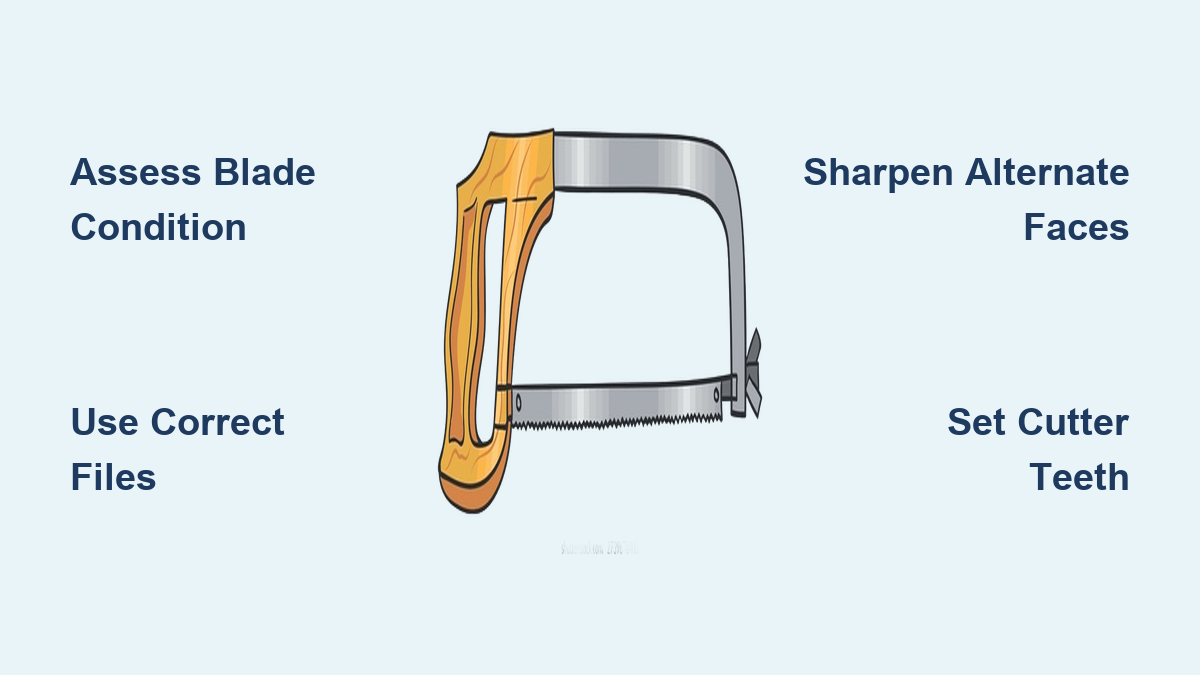
How to Sharpen a Bow Saw: Quick Steps
If your bow saw struggles to bite into wood, binds mid-cut, or leaves behind ragged edges, it is likely dull but not doomed. Knowing how to sharpen a bow saw can revive an old tool, save money, and build self-reliance, especially for bushcrafters, campers, and trail maintainers. While many opt to replace cheap blades, high-quality models are designed to be sharpened repeatedly. This guide walks you through every step, from assessing your blade’s condition to testing the final result.
Assess Blade Condition First
Before filing, determine if sharpening is worth the effort or if replacement is smarter.
Check for Repairable Damage
Inspect the blade closely for rust, pitting, bent teeth, or broken tips. Surface rust can often be cleaned off without affecting performance. Focus on the tooth structure: as long as the cutters and rakers retain their shape, sharpening will help. If multiple teeth are missing or severely damaged, replacement may be more practical.
A user restored a functional but dull bow saw bought for $1 at a garage sale, proving even aged tools can be revived.
Decide: Sharpen or Replace
Many modern bow saws use thin, low-temper steel that does not hold an edge well. These disposable-grade blades from big-box stores are often not worth sharpening. In contrast, premium blades from specialty suppliers are built for durability and repeated sharpening. Models such as the Rough Crosscut, Rip, and Rip Joinery cost under $20 and feature robust tooth geometry.
Bottom line: sharpen quality blades. Replace junk ones.
Gather the Right Sharpening Tools
Using proper tools ensures precision and prevents damage to the blade.
Use Correct Files for Each Task
You will need several file types for complete sharpening:
• Slim taper file (triangular) for sharpening cutter teeth on alternate faces
• Triangular or flat file matching the original tooth angle
• Chainsaw or rat-tail file for cleaning out gullets
• Smooth file or fine sandpaper (220+ grit) for removing burrs
Some premium saws require a cant file, a specialized tool shaped to match unique tooth profiles.
Get a Saw Set for Tooth Alignment
A mechanical or plier-style saw set adjusts the set, which is the outward bend of cutter teeth that creates kerf clearance. Only cutter teeth are set. Raker teeth stay straight.
Optional: Use a Jointing File
A coarse flat file mounted in a block levels all teeth to the same height before sharpening. This step, called jointing, ensures even contact during filing and improves sharpening consistency.
Straighten and Prepare the Teeth
Start with physical corrections before any filing begins.
Fix Bent or Splayed Teeth
Use a file or saw tooth setter to gently realign misaligned teeth. Even slight bends can cause binding, which mimics dullness.
Check the set of the teeth as sometimes they close up, making sawing difficult. People think they are blunt when they are just misaligned.
Joint the Teeth (Recommended)
If teeth vary in height, joint them first:
- Clamp the saw securely
- Hold the flat file level across the tooth row
- File in short, even strokes using light pressure
- Stop when the file just touches each tooth tip
This creates a uniform starting point. Avoid over-filing. You are not sharpening yet, just leveling.
Sharpen the Cutter Teeth
Now shape the cutting edges for clean, aggressive performance.
File on the Push Stroke Only
Secure the blade in a vise. Use a triangular or slim taper file and apply pressure only when pushing forward. Lift slightly on the return stroke to preserve the file is teeth.
Filing on both strokes dulls the file faster and creates inconsistent edges.
File Alternate Faces Correctly
Work one side of the blade at a time:
- File the left face of one tooth
- Skip the next
- File the left face of the third
- Continue down the line
Then flip the saw and repeat on the opposite side, filing the right face of the previously skipped teeth. This maintains the staggered cutting pattern essential for smooth cutting.
Maintain the Correct Filing Angle
Angle accuracy is key. File at 75° to the tooth line (per traditional crosscut saw practice) or approximately 60° to the blade (common for rip-style teeth). The difference reflects different tooth types. Match your angle to the existing bevel when possible.
File each tooth with two to three firm strokes. Aim to form a sharp knife edge without reducing tooth height.
Shape and Set the Raker Teeth
Rakers control depth and chip flow. They do not cut but must be properly profiled.
File Rakers Perpendicular to Blade
Use a flat or triangular file at 90° to the tooth line. Shape the tip into a chisel edge.
Keep Rakers Slightly Lower
The raker should sit 0.003 to 0.005 inches below the cutter tips. This prevents dragging and allows cutters to do the work. If rakers are too high, they will bind and slow the cut.
After filing, the raker should look shorter and flatter than adjacent cutters.
Clear the Gullets and Deburr
Final prep steps ensure smooth operation and chip removal.
Clean Out the Gullets
Use a chainsaw file or rat-tail file to clear debris from the gullets, which are the curved spaces between teeth. Built-up pitch or rust restricts chip clearance, leading to overheating and binding.
Rotate the file slightly as you work to match the gullet is curve.
Remove Metal Burrs
After filing, run a smooth file or fine sandpaper along both sides of the blade. This removes burrs that can snag wood or skin.
Drag a fingertip carefully along the blade edge. No sharp ridges should remain.
Set the Cutter Teeth for Smooth Cutting
Adjusting the set prevents the blade from binding in the kerf.
Use a Saw Set for Consistent Offset
- Position the saw set over a cutter tooth
- Squeeze the handles to bend the tooth outward
- Alternate sides: left, right, left, right
- Apply even pressure for uniform set
Never set raker teeth. They stay aligned with the blade to maintain cutting depth.
Verify Proper Kerf Width
The set should create a kerf slightly wider than the blade body. Test by running the blade through a scrap cut. If it binds, increase the set slightly.
Test the Saw is Performance
A real-world cut reveals whether your sharpening succeeded.
Cut Dry Wood for Best Feedback
Use seasoned pine or hardwood, not green or wet wood. Start the cut with light pressure and let the teeth do the work.
Watch for ease of starting, smooth consistent motion, minimal effort required, and fine sawdust (not coarse chunks).
A properly sharpened blade cuts cleanly, requires minimal effort, and produces fine sawdust.
Diagnose and Retouch if Needed
If the saw binds or cuts poorly, recheck the set. Uneven or insufficient set causes binding. Inspect filing angles. Inconsistent angles lead to uneven cutting. Verify raker height. If rakers are too high, they drag.
Make small adjustments and retest.
Maintain Your Bow Saw Long-Term
Keep your saw ready for action with simple care habits.
Sharpen When Performance Drops
Sharpen when cutting requires more force, when wood fibers tear instead of slice cleanly, or when the blade wanders or binds. Occasional users may sharpen once per season. Frequent users should touch up every few uses.
Prevent Rust and Damage
After each use, wipe the blade dry and apply a light coat of oil (boiled linseed, machine oil, or WD-40). Store in a dry place with a blade guard or sheath. This prevents rust and preserves the edge.
Build Skill Through Practice
Even failed attempts teach valuable lessons. Over time, your technique improves. Consider starting with inexpensive blades to practice before working on premium tools.
Frequently Asked Questions About Sharpening a Bow Saw
Can every bow saw blade be sharpened?
Not every blade is worth sharpening. Modern disposable blades from big-box stores often use thin, low-temper steel that does not hold an edge. High-quality blades from specialty suppliers are designed for repeated sharpening and will respond well to the process.
How do I know when my bow saw needs sharpening?
Your bow saw needs sharpening when cutting requires more force than usual, when wood fibers tear instead of slicing cleanly, or when the blade wanders or binds during use. Fine sawdust indicates a sharp blade. Coarse chunks indicate dullness.
What is the proper filing angle for cutter teeth?
The filing angle depends on the tooth type. Traditional crosscut teeth are filed at 75° to the tooth line. Rip-style teeth are typically filed at approximately 60° to the blade. Match your angle to the existing bevel when possible.
Should I set the raker teeth as well as the cutter teeth?
No. Only cutter teeth should be set. Raker teeth remain aligned with the blade to maintain cutting depth. Setting raker teeth will cause dragging and poor performance.
How often should I sharpen my bow saw?
For occasional users, sharpening once per season may suffice. Frequent users like bushcrafters or trail maintainers should inspect and touch up blades every few uses. Always sharpen when performance drops.
Can I use a regular file, or do I need specialized saw files?
You need specialized files for proper results. A slim taper file (triangular) works best for cutter teeth. A chainsaw file or rat-tail file cleans gullets. Using regular files risks damaging the tooth geometry and reducing cutting efficiency.
Key Takeaways for Sharpening Your Bow Saw
Sharpening a bow saw is a learnable skill that combines precision filing, mechanical adjustment, and functional testing. Start by assessing whether your blade is worth the effort. Quality blades respond well to sharpening. Disposable blades are better replaced. Gather the right tools, including appropriate files and a saw set, before beginning. Work methodically through each stage: straighten teeth, joint if needed, file cutters on alternate faces, profile rakers, clear gullets, set the teeth, and deburr. Test with a dry wood cut to verify performance. Maintain your sharpened blade with regular cleaning, oiling, and proper storage. Knowing how to sharpen a bow saw gives you control over your tools, saves money over time, and builds valuable self-reliance. Worst case, you learn and replace the blade. Best case, you become the person who keeps tools alive when others give up.