How to Choose a Bow String: A Simple Guide
Choosing the right bow string can feel overwhelming with so many options, materials, and technical specifications to consider. Whether you are upgrading from a basic setup or purchasing your first custom string, the wrong choice leads to inconsistent accuracy, reduced arrow speed, and potentially dangerous limb damage. This guide walks you through every factor that matters, from measuring your bow correctly to selecting materials that match your equipment and shooting goals.
By the end, you will understand exactly how to match string length to your bow, choose between Dacron and high-performance materials, determine the correct strand count, and maintain your string for years of reliable use.
Determine Correct String Length Using AMO Standards
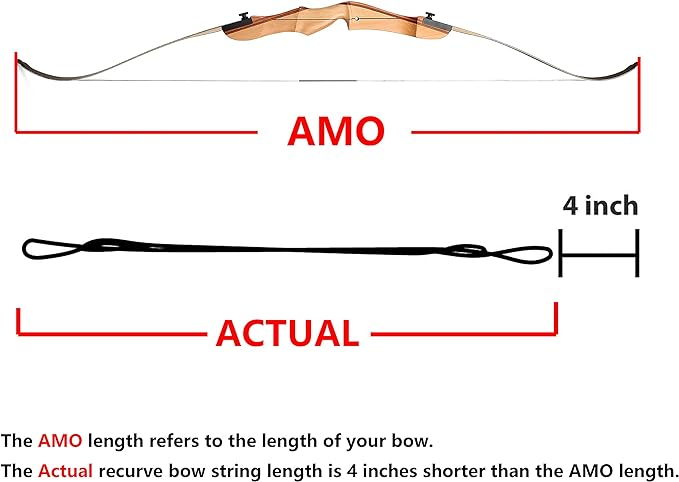
The AMO standard governs bow and string sizing, but it works differently than you might expect. The number stamped on your bow represents its classification length, not the physical string measurement you need.
What AMO Numbers Actually Mean
AMO stands for Archery Manufacturers and Merchants Organization, the body that standardizes bow sizing. When you see “68” stamped on your recurve, that is a 68-inch AMO bow. However, the actual string length required is shorter. A 68-inch AMO recurve bow needs a 64-inch physical string, sold as a “68 AMO string.” This difference accounts for the string wrapping around the limb tips and the brace height when the bow is strung.
A 68 AMO string may measure between 64 and 65.25 inches when laid flat, depending on the material and whether it has been pre-stretched during manufacturing. Always purchase based on the AMO designation rather than physical measurements.
Apply the Subtraction Rule
Use these simple formulas to calculate your string length based on your bow type. For recurve bows, subtract 4 inches from the AMO length. For longbows, subtract 3 inches.
| Bow Type | Formula | Example |
|---|---|---|
| Recurve | AMO – 4 inches | 68″ → 64″ string |
| Longbow | AMO – 3 inches | 70″ → 67″ string |
These are general guidelines. Always verify with your bow manufacturer, especially for custom or vintage equipment.
Measure Your Bow Without an Existing String
If your bow currently has no string, measure along the belly from string groove to string groove. For recurve bows, follow the curve of both limbs and the riser. For longbows, measure in a straight line across. This measurement equals your AMO bow length. Apply the subtraction rule to find your string length.
Measure an Existing String for Replacement
To replace a working string, lay it flat and measure from the outer edge of one loop to the outer edge of the other. Do not stretch the string during measurement. Order a new string with the same AMO designation. Remember that a 65-inch physical string may still be labeled as a “68 AMO” string due to material stretch.
Account for Pre-Stretching
Modern high-performance strings like Fast Flight and BCY 8125 are often pre-stretched during manufacturing, which means they maintain their length with minimal further stretching. Dacron strings (B50/B55) stretch up to 1 inch over time, known as creep. If ordering a non-pre-stretched string, consider ordering 1 to 2 inches shorter than the standard calculation to allow for settling.
Set Proper Brace Height with String Twists
Brace height is the distance from the deepest part of the grip to the string when your bow is strung. Getting this right affects arrow speed, noise, vibration, and shot consistency.
Why Brace Height Impacts Performance
A brace height that is too short, below 7 inches for most recurves, produces faster arrow speed but creates more vibration and a louder shot. A brace height that is too long, above 9 inches, results in a mushy draw feel and reduced power. The ideal range sits between 7 and 9 inches for recurve bows and 6 to 8 inches for longbows. Always check your bow manufacturer’s recommendation before setting brace height.
Adjust Brace Height Using Twists
Adding twists to your string shortens it and increases brace height. Removing twists lengthens the string and decreases brace height. Most 68-inch bows use between 20 and 60 twists as a starting point. Elite archers like Brady Ellison use 50 to 70 twists, while Simon Fairweather used over 80 twists on his competition setup.
Twist in the same direction the center serving is wound. Test by gently twisting the served section and choosing the direction that tightens the wrap. Never fully unwind a new pre-stretched string, as this can damage strand alignment.
How Twist Count Affects Your Shot
Low twist counts below 20 produce slightly faster arrows but increase noise and create harsh, inconsistent feel. Medium twist counts between 20 and 60 provide balanced performance and work well for most shooters. High twist counts above 60 slow the arrow slightly but produce quieter shots with smoother feel, making them popular among target archers and hunters who value stealth.
Select the Right Material for Your Bow Type

String material directly impacts arrow speed, noise, vibration, limb safety, and longevity. Using the wrong material risks damaging your bow.
Compare Dacron, Fast Flight, and Advanced Materials
Dacron (B50/B55) offers high stretch, lower arrow speed around 150 fps, and quiet operation. It absorbs shock and protects limb tips, making it ideal for wooden, vintage, and beginner bows. Dacron is safe for all bows and especially recommended for equipment made before 1990.
Fast Flight and similar materials (Spectra/Dyneema) provide very low stretch and high arrow speeds, gaining 5 to 10 fps over Dacron. However, they produce louder shots and can damage non-reinforced limb tips. Only use Fast Flight on bows specifically approved for it.
BCY 8125 and D97 offer extremely low stretch and the highest arrow speeds, favored by elite target archers. These require Fast Flight-approved limbs.
Vectran blends provide near-zero creep but create harsh shot feel and reduce limb life. Major manufacturers like Hoyt and Win & Win advise against using Vectran on recurve bows.
Use Dacron for Wooden and Vintage Bows
Always choose B55 Dacron for wooden, handmade, or pre-1990 bows, regardless of how modern the limbs appear. Dacron absorbs shock, protects string grooves, and resists moisture. The trade-off is slower arrow speed and the need for more frequent waxing and tuning.
Upgrade to Fast Flight or 8125 for Performance
If your bow has reinforced limb tips, you can safely use Fast Flight, 8125, or D97 for higher arrow speeds and flatter trajectory. These materials last longer with proper care. Always verify your bow is Fast Flight-approved before ordering. Using low-stretch strings on non-reinforced limbs risks delamination or catastrophic limb failure.
Identify Reinforced Limb Tips
Look for thickened ends at the limb tips or visible plastic, metal, or fiber caps at the nock points. If the limb tapers to a thin edge with no reinforcement, stick with B55 or D97 only.
Match Strand Count to Your Draw Weight

Strand count affects strength, durability, nock fit, string mass, and tuning stability. Getting this wrong leads to inconsistent shooting and premature string wear.
Follow Draw Weight Guidelines
Match your strand count to your bow’s draw weight using this chart. For Dacron strings, use 10 to 12 strands for 10 to 30 pounds, 14 strands for 30 to 40 pounds, and 16 strands for above 40 pounds. For Fast Flight and Dyneema strings, use 12 to 14 strands for 10 to 30 pounds, 16 strands for 30 to 40 pounds, and 18 to 20 strands for above 40 pounds.
Understand How Strand Count Affects Performance
More strands create a heavier string that dampens vibration and produces quieter shots, but slightly reduces arrow speed. More strands also create tighter nock fit, which may require larger nocks or thinner serving. Fewer strands are lighter and marginally faster, but wear out faster and create looser nock fit that risks arrow fall-off.
When changing strand count, adjust your serving thickness or nock size to maintain consistent nock tension.
Test Nock Tension Correctly
Your arrow should hang securely from a horizontal string without sliding, then fall off with one sharp tap. Too tight risks fletching damage. Too loose causes inconsistent release or the arrow falling off entirely. Adjust serving material at the nock point to fine-tune fit.
Install Quality Serving for Durability
Serving protects the high-wear areas of your string where the arrow nock, your release, and your armguard contact the string.
Choose the Right Serving Type
End-loop serving goes on both loops and prevents fraying while protecting limb tips. Center serving wraps around the nock point and resists wear from your release tab and arrow nock. Both types are essential for a durable string.
Select Serving Material
Angel braided serving offers smooth release and traditional feel, widely used for center serving. BCY Halo performs similarly to Angel. BCY Polygrip works best for end loops because it grips strands securely without being abrasive. Angel Majesty combines smoothness with tenacious grip, performing well in both center and end applications.
Poor serving leads to fraying, slippage, and inconsistent tuning. Investing in quality serving pays off in durability and consistency.
Account for Center Mass in Your Setup
Adding weight at the center of your string affects tuning more than you might expect. Ten grains of weight at the center has approximately five times the impact of 10 grains distributed along the full string length.
Choose Lightweight Accessories
Install kisser buttons and nocking points before final tuning, as adding them later shifts nock travel and group patterns. Use low-profile, lightweight options to minimize disturbance to your setup. Heavy brass components slow arrow speed, increase hand shock, and disrupt timing.
Ensure Quality Construction and Proper Break-In
Even premium materials fail if poorly constructed. Buying from reputable makers ensures consistent strand tension, balanced twist distribution, and secure servings.
Buy From Trusted Sources
Shatterproof Archery offers handmade Flemish twist strings with free returns and remakes. Quicks Archery provides fast custom builds in 2 to 3 days with wide material selection. Three Rivers Archery offers expert phone support to help match your string to your bow. Visiting a local archery shop for your first custom string ensures professional guidance matching specs to your setup.
Break In New Strings Properly
To equalize strand tension, remove all twists, string the bow (brace height will be low), and let it sit overnight or shoot 10 to 20 arrows at close range. Then re-twist to correct brace height. This process helps tighter strands stretch and looser ones engage, improving consistency.
Maintain Your String for Maximum Lifespan
Regular maintenance extends string life and preserves performance. Neglecting care leads to premature wear, inconsistent shooting, and safety risks.
Wax by Material Type
Dacron strings need beeswax or paraffin-based wax every 5 to 10 hours of shooting. Fast Flight and 8125 require synthetic wax like Easton Dr. D every 10 to 20 hours. Vectran blends need synthetic wax every 5 to 10 hours to slow degradation.
Modern synthetic waxes add less weight, resist water better, and maintain consistent string performance compared to traditional waxes.
Clean and Restore Regularly
Use string cleaner to remove dirt and old wax, then follow with restorative treatment and fresh wax. The Easton Dr. D 3-Step Kit includes cleaner, restorer, and wax in one package.
Rotate Strings and Keep Spares
Always own at least two strings per bow and rotate them every few shooting sessions. Rotating reduces wear, maintains consistency, and prevents downtime when one string needs replacement. The archery saying holds true: two is one, and one is none.
Verify Bow Compatibility Before Buying
Your bow’s construction dictates what strings are safe and effective. Always confirm compatibility before ordering.
Match Material to Your Bow Type
Wooden, vintage, and traditional bows require B55 Dacron and work safely with non-reinforced limb tips. Fiberglass recurves with reinforced tips can use D97, 8125, or Fast Flight. Hybrid setups using components from different manufacturers should follow the limb maker’s guidance.
Using Fast Flight or 8125 on non-reinforced limbs risks limb breakage. When in doubt, choose Dacron.
Frequently Asked Questions About Choosing a Bow String
What happens if I use the wrong string material on my bow?
Using Fast Flight or 8125 on bows without reinforced limb tips can cause delamination or catastrophic limb failure. Dacron on a modern competition bow reduces arrow speed and performance but will not damage the bow. Always match material to your limb construction.
How often should I replace my bow string?
Replace your string when you notice fraying, significant stretch (brace height changes noticeably), inconsistent shooting, or after approximately 2 to 3 years of regular use. Wax and maintain strings properly to maximize lifespan.
Can I use the same string for recurve and longbow?
No, because recurve and longbow bows have different AMO lengths and brace height requirements. A recurve bow typically needs AMO minus 4 inches, while a longbow needs AMO minus 3 inches. The string length and characteristics differ significantly.
Does strand count affect arrow speed?
Yes, more strands create a heavier string that slightly reduces arrow speed, while fewer strands are lighter and marginally faster. However, the difference is small, and durability and nock fit typically matter more than the minor speed gain from fewer strands.
Should I choose Dacron or Fast Flight for my first bow string?
Choose Dacron (B55) for your first string, especially if shooting a wooden or traditional bow. Dacron is more forgiving, protects your equipment, and provides quiet, consistent performance. Upgrade to Fast Flight or 8125 only after confirming your bow has reinforced limb tips and you understand the tuning requirements.
Key Takeaways for Choosing Your Bow String
Choosing the right bow string requires matching several factors: correct AMO-based length, appropriate material for your bow type, strand count aligned with draw weight, and quality serving construction. Always verify limb tip reinforcement before selecting high-performance materials like Fast Flight or 8125.
Proper installation with correct twist count sets your brace height for optimal feel and accuracy. Maintaining your string with regular waxing, cleaning, and rotation extends its life and preserves performance. Keep at least two strings per bow and rotate them during use.
Invest time in selecting the right string and maintain it properly. Your accuracy, equipment longevity, and shooting enjoyment depend on this foundational component of your archery setup.