How Fast Does a 60 lb Bow Shoot? FPS Explained
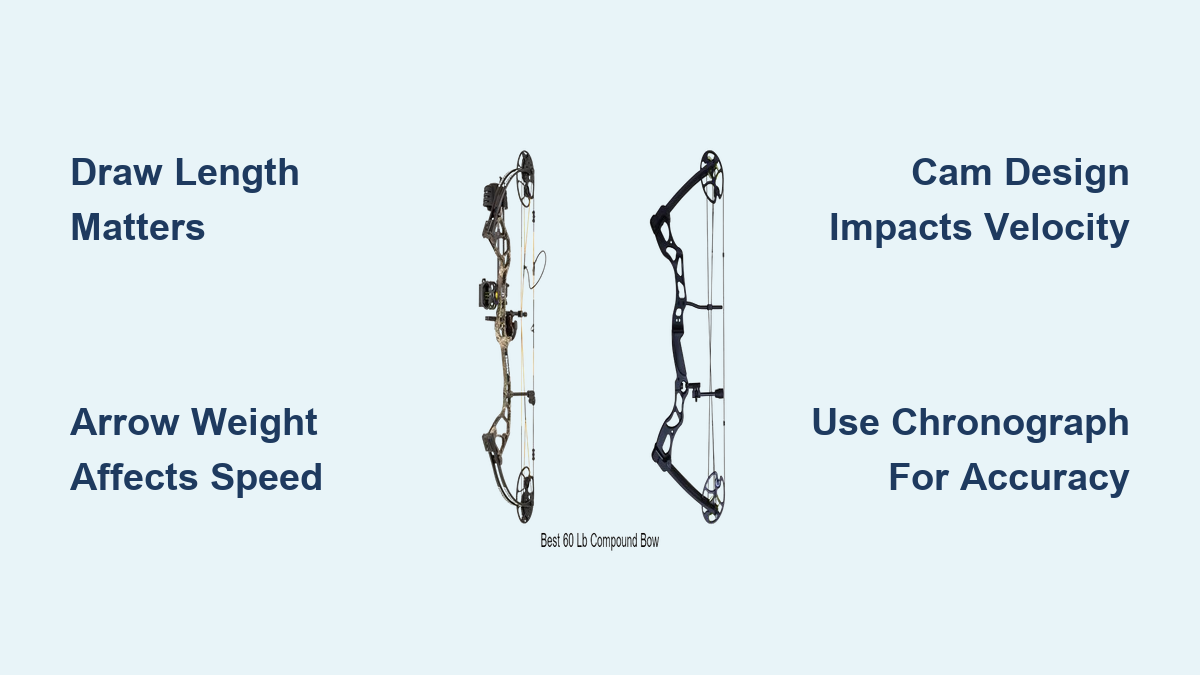
If you’re wondering how fast a 60 lb bow shoots, the answer isn’t a single number. It depends on several key factors like draw length, arrow weight, cam design, and bow model. However, based on real-world chronograph data from experienced archers, a typical 60 lb compound bow shoots arrows between 260 and 305 feet per second under standard hunting conditions.
Many shooters transitioning to a 60 lb setup, especially those concerned about joint strain, find they lose minimal performance while gaining comfort and longevity in the field. In this guide, you’ll learn the actual speed ranges, which bow models deliver the most speed, and how to maximize your setup without sacrificing accuracy.
Real-World Speed Ranges for 60 lb Bows
Actual arrow speeds at 60 lbs vary widely based on equipment and setup. The fastest setups approach 305 fps, while more moderate configurations settle around 260 fps.
Bowtech Allegiance: Leading Speed at 60 lbs
The 2007 Bowtech Allegiance consistently ranks among the fastest production bows at 60 pounds. Multiple archers report velocities exceeding 300 fps with lightweight arrows.
One archer shooting a 323-grain Easton Redline at 62 lbs and 29-inch draw recorded 313 fps. Another using speed mods at 60 lbs and 28.5-inch draw still achieved 266 fps with a much heavier 421-grain arrow, proving the bow’s efficiency across different setups.
Mathews Prestige: Smooth Performance with High Speed
The Mathews Prestige delivers both speed and shooter comfort. At 60 to 61 lbs and 28-inch draw, one user clocked 304 fps with a 317-grain Carbon Tech Cheetah arrow.
This single-cam bow combines high efficiency with a smooth draw cycle, making it ideal for hunters who want speed without shoulder fatigue.
Hoyt and Parker: Reliable Mid-Range Options
Hoyt models like the Ultratec at 60.5 lbs and 30-inch draw hit 296 fps with a 320-grain arrow. The Protec offers solid accuracy at 254 to 265 fps.
The 2007 Parker Hornet at 62 lbs and 28-inch draw reached 279 fps with a 340-grain Easton Axis arrow. These older but proven platforms remain competitive when properly maintained.
How Draw Length Affects Arrow Speed
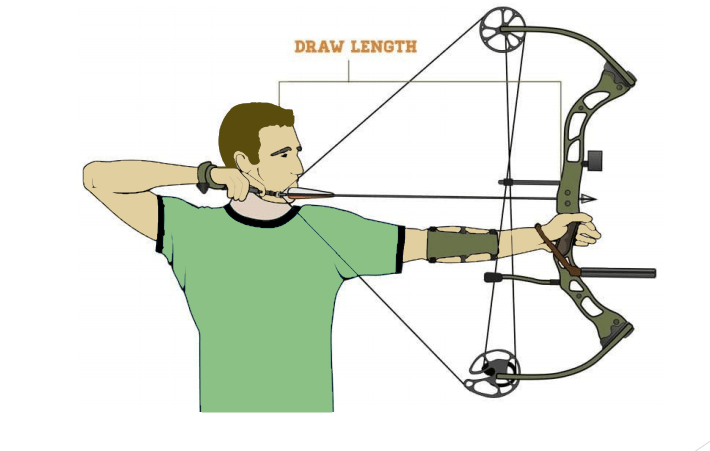
Your draw length directly impacts arrow speed, even at the same draw weight. Shorter draws store less energy, resulting in slower velocities.
Draw Length Impact: 15 to 25 fps Difference
An archer with a 27-inch draw will typically shoot 15 to 25 fps slower than someone with a 29-inch draw, assuming identical bows and arrows.
For example, a 2006 Bowtech Equalizer at 60 lbs and 27-inch draw shoots around 280 fps. The same model at 29-inch draw can exceed 295 fps. As one archer noted, you’re looking at about 21 fps loss for each inch of draw length below maximum.
Maximizing Speed with Shorter Draws
If you have a shorter draw length, consider these options:
- Use speed cams or mods designed for your bow
- Choose lightweight arrows in the 300 to 330 grain range
- Ensure full draw engagement with no cam lean or timing issues
- Research models optimized for 26 to 28-inch draws
Arrow Weight’s Impact on Velocity

Arrow weight is one of the most influential factors in arrow speed, and it’s often misunderstood by newer archers.
Light Arrows: Significant Speed Gains
Shooting a light arrow can boost speed significantly. A Carbon Tech Cheetah at 312 grains yielded 316 fps at 62 lbs. Easton Redlines at 323 grains delivered 313 fps.
Every 10 grains of arrow weight affects speed by 2 to 4 fps, depending on bow efficiency. Switching from a 400-grain to a 300-grain arrow may gain 20-plus fps, but at the cost of kinetic energy and potentially more noise.
Heavy Arrows: Slower but More Kinetic Energy
Some hunters prioritize penetration over raw speed. A 429-grain arrow on a Bowtech Allegiance at 60 lbs still achieved 281 fps.
While slower, heavier arrows carry more kinetic energy and resist wind drift better. They also tend to stabilize faster and create quieter shots due to reduced vibration.
The 5 Grains Per Pound Rule
A common rule of thumb is to use 5 grains of arrow weight per pound of draw weight for optimal balance. At 60 lbs, ideal arrow weight is approximately 300 grains. This helps maximize speed without risking bow damage or poor flight.
Going below 5 GPP, such as 250 grains at 60 lbs, risks dry-fire-like stress and reduced accuracy. Most manufacturers recommend a minimum of 5 to 6 GPP for safe and efficient shooting.
Real-World Speed Data at 60 lbs
Here is a summary of actual chronograph readings from archers using 60 lb bows:
| Bow Model | Draw Weight | Draw Length | Arrow Weight | Speed (fps) |
|---|---|---|---|---|
| Bowtech Allegiance | 61 lbs | 29 in | 349 gr | 302 |
| Mathews Prestige | 60 to 61 lbs | 28 in | 317 gr | 304 |
| Parker Hornet | 62 lbs | 28 in | 340 gr | 279 |
| Bowtech Equalizer | 60 lbs | 27 in | 300 gr | 280 |
| Hoyt Ultratec | 60.5 lbs | 30 in | 320 gr | 296 |
| Reflex Rampage | 60 lbs | 30 in | 389 gr | 276 |
| Bowtech Patriot | 63 lbs | 28.5 in | 290 gr | 285 |
| Switchback | 55 lbs | 27 in | 340 gr | 265 |
| Hoyt Protec | 61 lbs | 29.5 in | 350 gr | 265 |
| TomKat | 60 lbs | 27.5 in | 355 gr | 250 |
As shown, cam design and arrow selection matter more than raw draw weight. The Bowtech Allegiance and Mathews Prestige lead in speed, while older or smoother-drawing bows trade velocity for shootability.
Why IBO Ratings Can Mislead
The IBO standard claims speeds like 350 fps, but these numbers are based on unrealistic lab conditions: 70 lbs draw weight, 30-inch draw length, and 350-grain arrow.
This means a bow rated at 350 IBO fps might only shoot around 300 fps at 60 lbs and 28.5-inch draw, especially with heavier hunting arrows.
Estimating Real-World Speed
You can estimate real-world speed using this formula:
Estimated FPS equals IBO speed minus 2 fps per pound under 70, minus 2 fps per inch under 30, minus 1.5 fps per 10 grains over 350.
For example, a bow with 350 IBO fps at 60 lbs and 28.5-inch draw with a 400-grain arrow would lose approximately 20 fps for the weight difference, 3 fps for the shorter draw, and 7.5 fps for the heavier arrow, yielding around 319 fps.
But most high-efficiency bows fall short of this due to cam timing, string stretch, and environmental conditions.
How to Measure Your Bow’s Speed
Guessing won’t cut it. Use a chronograph to know your true arrow speed.
Is a Chronograph Worth It?
Yes. A chronograph is absolutely worthwhile, especially if you tune your bow, test different arrows or broadheads, or want consistent field performance.
Modern chronographs like the Caldwell Laser or Timney Alpha-Match cost under $150 and pay for themselves in better setups and cleaner kills.
Tips for Accurate Readings
- Shoot from a rest or vise to eliminate human variation
- Use consistent form across all test shots
- Test in calm, well-lit conditions
- Average at least 5 shots for reliable data
- Record arrow weight and draw settings each time
A chronograph removes guesswork and helps you compare upgrades objectively.
Balancing Speed and Shootability
While speed is exciting, accuracy, comfort, and silence matter more in hunting situations.
Why Quietness Beats Speed
One seasoned hunter put it plainly: quietness over speed any day. A loud bow spooks game before the arrow arrives, even at 300 fps.
Heavier, well-tuned bows with dampeners, string silencers, and soft cams often shoot slower but increase kill probability by keeping deer from flinching.
Efficiency Over Peak Numbers
Modern bows are more efficient than older models. You don’t need 70-plus lbs to get ethical knockdown power. A 60 lb bow with a 300-grain arrow can generate 65 to 70 ft-lbs of kinetic energy, more than enough for deer, hogs, or elk at typical ranges.
Tips to Maximize 60 lb Bow Speed
Want to get every fps out of your 60 lb setup? Follow these proven strategies.
Use Speed-Oriented Cams
- Install speed mods compatible with your bow
- Ensure proper cam timing and synchronization
- Avoid soft-draw cams if speed is the priority
Optimize Arrow Setup
- Stick to 5 to 6 grains per pound, which means 300 to 360 grains at 60 lbs
- Use lightweight carbon shafts for maximum velocity
- Minimize fletching drag with 2-inch vanes or feathers
Maintain Your Bow
- Replace worn strings and cables before they affect performance
- Lubricate axles and cams regularly
- Check brace height and tiller settings annually
Upgrade Small Components
- Use lighter D-loop material
- Choose reduced-mass nocking points
- Select high-speed string loops
Even small changes can gain 5 to 10 fps without compromising safety or accuracy.
Frequently Asked Questions About 60 lb Bow Speed
What is the average speed of a 60 lb compound bow?
Most 60 lb compound bows shoot between 260 and 305 fps. The exact speed depends on your draw length, arrow weight, and bow model. Bows with efficient cam systems like the Bowtech Allegiance and Mathews Prestige tend to hit the higher end of this range.
Does dropping from 70 lbs to 60 lbs significantly reduce speed?
You can expect to lose approximately 20 to 30 fps when dropping from 70 lbs to 60 lbs, depending on your bow’s efficiency. However, modern bows are highly efficient, so the performance drop is often minimal. Many archers find the trade-off worth it for improved comfort and reduced joint strain.
What arrow weight should I use for a 60 lb bow?
Aim for 300 to 360 grains, which follows the 5 to 6 grains per pound rule. This provides a good balance between speed and kinetic energy while ensuring your bow operates safely without excessive stress.
Can a 60 lb bow kill deer effectively?
Yes, a 60 lb bow with a properly weighted arrow generates sufficient kinetic energy for ethical deer kills. Most states require a minimum of 40 to 50 lbs for big game hunting, making 60 lbs more than adequate. The key is arrow selection and shot placement.
Which bow model is fastest at 60 lbs?
The 2007 Bowtech Allegiance consistently delivers the highest speeds at 60 lbs, with many archers reporting over 300 fps. The Mathews Prestige also performs exceptionally well, achieving around 304 fps in real-world testing.
How important is draw length for arrow speed?
Draw length is critically important. Each inch of draw length can affect speed by 15 to 25 fps. A 27-inch draw will typically be 20 fps slower than a 29-inch draw on the same bow. If you have a shorter draw, look for bows specifically optimized for short-draw shooters.
Key Takeaways for 60 lb Bow Speed
A 60 lb bow typically shoots between 260 and 305 fps in real-world conditions, with the fastest models approaching 310 fps. Draw length and arrow weight are the two biggest factors affecting your actual speed. A 1-inch reduction in draw length can cost you 15 to 25 fps, while lighter arrows in the 300-grain range can add 20 to 30 fps compared to heavier hunting arrows.
High-efficiency designs like the Bowtech Allegiance and Mathews Prestige lead the pack in speed at 60 lbs. However, don’t sacrifice accuracy and quietness for raw velocity. Many experienced hunters prefer slightly slower but smoother, quieter setups because quiet bows result in more successful hunts.
For aging archers stepping down from heavier weights, the performance drop is surprisingly small. Modern bows are far more efficient than models from 5 to 10 years ago, making 60 lbs a smart, sustainable choice for lifelong hunting. If you’re considering dropping draw weight for shoulder or elbow health, the minimal speed loss is well worth the improved comfort and longevity in the field.