How to Hang a Bow on the Wall: Easy Steps
You’ve invested in a high-performance bow, whether it’s a sleek compound, a classic recurve, or a handcrafted longbow. Now you want to display it proudly on your wall. But hanging a bow isn’t just about aesthetics. It’s about preserving its integrity, preventing long-term damage, and keeping it accessible for your next outing. Done incorrectly, wall mounting can lead to limb creep, cam misalignment, or string degradation, costly issues that affect accuracy and lifespan.
This guide delivers a complete, step-by-step breakdown of how to hang a bow on the wall safely, securely, and stylishly. You’ll learn the best methods by bow type, discover what materials and mounts to use, and avoid the most common mistakes. Whether you’re organizing a garage workshop or creating a striking display in your living room, you’ll find actionable advice backed by archery experts and real-world user experiences.
Choose the Right Mounting Method for Your Bow
The method you choose determines how well your bow ages. Some approaches look convenient but cause hidden damage over time.
Horizontal Hanging: The Safest Method
The best way to hang a bow on the wall is horizontally, supported at two or more points. This method evenly distributes the bow’s weight and prevents stress on limbs, cams, and strings.
This approach works well for:
- Compound bows with or without accessories
- Recurve and longbows
- Bows used infrequently or stored for long periods
Support options include:
- Coated cup hooks (vinyl, rubber, or Plasti-Dip)
- Wooden dowels (4-inch oak or maple, spaced 24 to 30 inches apart)
- Guitar wall hangers adapted to cradle the riser
- U-brackets lined with felt or neoprene
Pro Tip: Position supports under the balance point of the riser or near the limb pockets. Never place supports directly on the limbs or string.
Vertical Hanging: Convenient but Risky
Vertical hanging is common in pro shops and hunting cabins, but it comes with trade-offs.
Common methods include:
- Hanging by the cam or idler wheel (compound bows)
- Hanging by the string or D-loop (not recommended)
- Supporting the riser or axle
Why some archers do it:
- Saves valuable wall space
- Keeps bows visible and accessible
- Works well for short-term use
Why others avoid it:
- Limb creep: Sustained tension can cause permanent deformation, like a rubber band left stretched
- Cam wear: Uncoated hooks can scratch cam surfaces
- String stress: Hanging by the string keeps limbs under tension, leading to loss of cast or serving wear
Verdict: If you must hang vertically, only use coated hooks on the cam and avoid long-term storage. Never hang by the string.
Disassembled Storage: Maximum Longevity
For traditional, wooden, or infrequently used bows, disassembly is the gold standard.
Steps to follow:
- Unstring recurve or longbow after each use
- Store in a hard case (Pelican-style) with foam inserts
- Wrap in a soft cloth or towel to prevent scratches
- Hang the case by its strap in a closet or under a bed
Benefits of this approach:
- Eliminates all limb stress
- Protects against dust, humidity, and UV exposure
- Mimics Olympic archery storage practices
One archer stores their takedown recurve unstrung in a soft case under the bed. No wall display, but the bow remains in perfect condition after years of use.
Pick the Best Wall Mount for Your Bow

Your mounting hardware makes or breaks the installation. Cheap hooks scratch finishes. Weak anchors pull out. Here’s how to do it right.
Use Coated Hooks to Prevent Damage
Metal-on-metal contact can scratch finishes and damage cam surfaces permanently.
Recommended hook types:
- Vinyl-coated cup hooks (¼ inch or ⅜ inch diameter)
- Rubber-tipped screws
- Plasti-Dip-coated eye bolts
Installation tips:
- Use #10 or #12 wood screws, 2.5 to 3 inches long
- Mount into wall studs (16 inches on center)
- Space dual hooks 24 to 30 inches apart to match bow width
Avoid drywall anchors unless rated for dynamic loads. Bows can shift and pull anchors loose over time.
Upgrade with a Commercial Bow Rack
For a secure, stylish, and functional solution, consider the Variable Bow Rack by Treeline Products.
Why it stands out:
- Adjustable height (28 to 35 inches) to fit axle-to-axle length
- Spring-loaded cam cradle locks in place hands-free
- Stabilizer hangers let you store fully assembled bows
- Pine or oak finish for workshop or living space use
- Multi-mount kit supports up to five racks side-by-side
Installation takes about 10 to 15 minutes with a drill, stud finder, and level. Weight capacity reaches up to 6 pounds, covering most compound bows.
User feedback: Archers praise its stability, with one reporting it survived an earthquake without falling.
Build a DIY Bow Rack
Custom racks offer flexibility and personal style.
Popular DIY designs:
- Pallet wood wall mounts (reclaimed wood, stained or sealed)
- Ladder-style racks with horizontal dowels for multiple bows
- Pegboard systems with adjustable hooks (ideal for garages)
Key build tips:
- Use hardwood or plywood for durability
- Line contact points with felt, rubber, or closed-cell foam
- Reinforce with a backing board screwed into studs
- Add slotted holes for adjustability
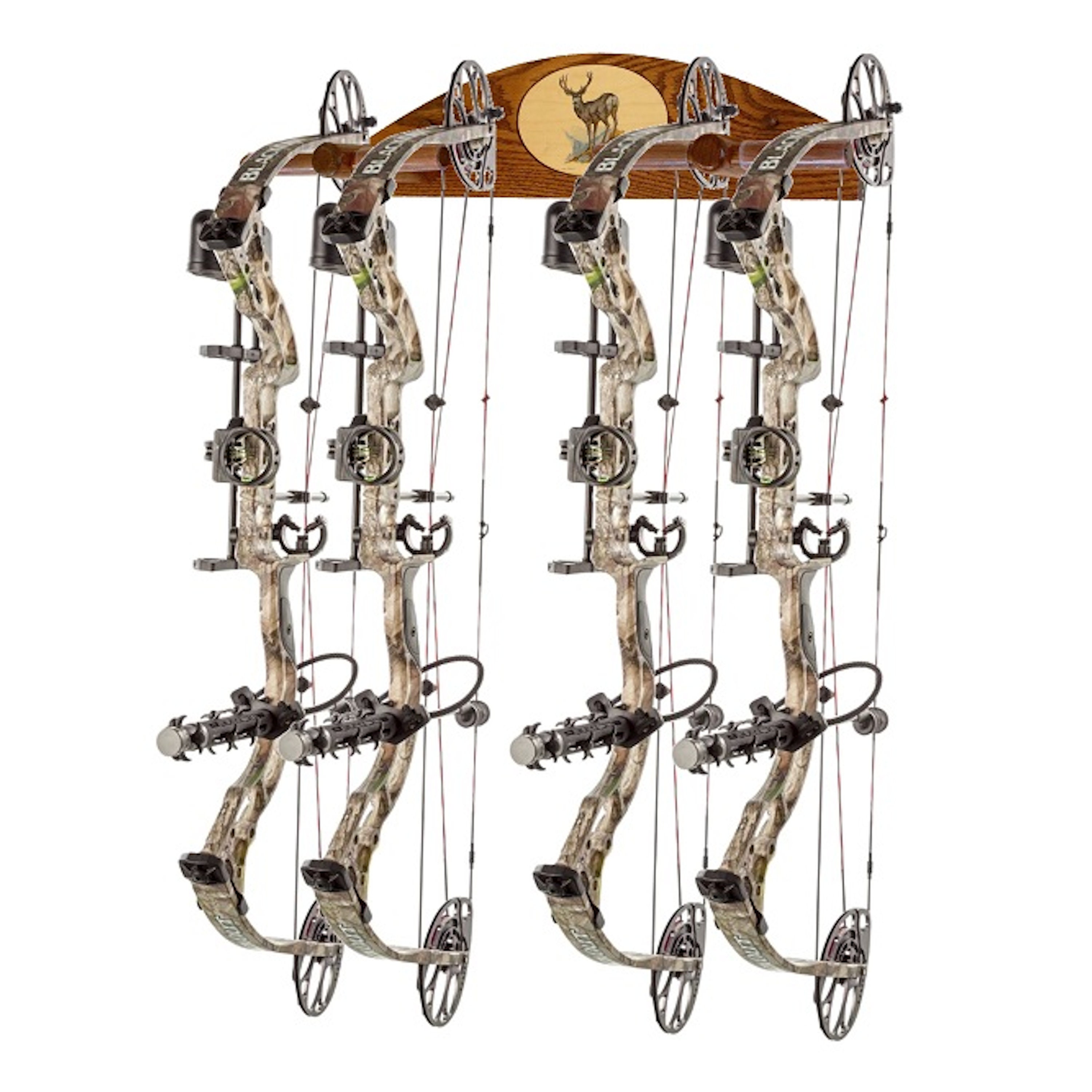
One user built a 4-bow rack using two 4-foot boards and four 4-inch dowels. This allows bows to hang either strung or unstrung.
Match Method to Bow Type
Not all bows handle hanging the same way. Here’s what works for each type.
Compound Bows: Use Cam Cradles or Riser Supports
Recommended approaches:
- Horizontal hanging on a Variable Bow Rack
- Guitar hangers positioned under the riser balance point
- Coated cup hooks on wall studs
Can stay assembled: Yes. Use racks with stabilizer hangers to avoid disassembly.
Avoid: Uncoated metal, hanging by the string, or long-term vertical cam hanging.
Recurve Bows: Hang Horizontal, Store Unstrung
Recommended approaches:
- Dual dowels or hooks spaced 24 to 30 inches apart
- U-brackets lined with foam to cradle limbs
- Unstring after use for long-term storage
Avoid: Vertical hanging by the string. It causes limb creep and string wear.
User insight: “I hang mine horizontally on rubber-coated hooks. It looks clean and keeps the bow safe.”
Traditional Wooden Bows: Never Hang Strung
Wood is highly sensitive to sustained tension and environmental stress.
Best practice:
- Unstring immediately after use
- Store in a hard case or horizontal cradle
- Keep away from heat, moisture, and sunlight
Never hang vertically. Risk of warping and permanent deformation is too high.
Longbows: Horizontal or Cased Storage Only
Similar to traditional recurves, longbows are prone to warping.
Recommended approaches:
- Horizontal cradle with soft padding
- Shadow box display for decorative use (unstrung)
- Under-bed storage in a soft case
Avoid: Any method that keeps the bow under tension.
Avoid These Common Mistakes
These errors cause more damage than people realize.
Hanging by the String
Even short-term, this places the limbs under constant stress.
Risks include:
- Limb set (permanent bend)
- String and serving wear
- Reduced arrow velocity over time
Carrying the bow by the string during a hike is fine. But not for wall hanging.
Using Uncoated Metal Hooks
Bare metal can scratch finishes and damage cam surfaces.
Solution: Always use coated hooks or lined brackets.
Mounting into Drywall Only
Bows may seem light, but dynamic movement (bumps, vibrations) can pull anchors loose.
Solution:
- Use a stud finder
- Screw into wood studs with 2.5 to 3 inch screws
- If studs aren’t available, use heavy-duty toggle bolts rated for 50+ pounds
Ignoring Environmental Factors
Where you hang your bow matters as much as how.
Avoid:
- Direct sunlight (UV degrades limbs and strings)
- Garage heat (can warp wood and laminates)
- Bathroom humidity (promotes rust and delamination)
- High-traffic areas (risk of bumps from kids or pets)
Enhance Security and Aesthetics
Add Theft Deterrence for Valuable Bows
If your bow is a target, consider these options:
- Cable locks threaded through the riser and wall mount
- High mounting (above a closet door or out of reach)
- Shadow boxes with glass for display and protection
One archer uses Plasti-Dip-coated eye bolts above a closet, adding a cable lock. Effective but signals high-value gear to visitors.
Design a Stylish Bow Wall Display
Turn your collection into art.
Popular themes:
- Rustic hunting cabin: Reclaimed wood racks, antlers, maps
- Modern minimalist: Black metal brackets, clean lines
- Archery gym: Pegboard with bows, quivers, and targets
Pro Tip: Use arrow wall mounts or magnetic strips to display arrows alongside the bow.
Install and Maintain Your Mount
Secure Mounting Is Non-Negotiable
Step-by-step installation:
- Locate wall studs with a stud finder
- Mark positions (use a level for straight alignment)
- Pre-drill holes to prevent wood splitting
- Insert #10 or #12 screws, 2.5 to 3 inches long
- Test with light pressure before hanging the bow
For DIY racks: Attach a 1×6 backing board to studs, then mount hooks or brackets to the board.
Inspect Regularly for Safety
Even the best mount can loosen over time.
Monthly checks:
- Tighten screws and brackets
- Inspect wood for cracks or warping
- Clean contact points to remove dust or grime
- Ensure padding hasn’t compressed or shifted
Earthquake Tip: One user reported a bow survived a quake because it was mounted with a rubber-tipped screw through the riser. Simple but effective anchor.
Frequently Asked Questions About Hanging a Bow on the Wall
Is it safe to hang a compound bow vertically?
Vertical hanging by the cam is common in pro shops but carries risks. Short-term display is generally fine with coated hooks, but long-term vertical hanging can cause limb creep and cam wear. Horizontal hanging remains the safest option for compound bows.
What happens if I hang my bow by the string?
Hanging by the string keeps the limbs under constant tension. This leads to limb set (permanent deformation), string and serving wear, and reduced arrow velocity over time. Never hang a bow by the string for storage.
Can I use regular hooks to hang my bow?
Regular uncoated metal hooks will scratch finishes and damage cam surfaces. Always use vinyl-coated, rubber-tipped, or Plasti-Dip-coated hooks designed to protect delicate surfaces.
How do I hang a recurve bow on the wall?
Hang recurve bows horizontally using dual supports spaced 24 to 30 inches apart. Unstring the bow after each use for long-term storage. Use coated hooks or U-brackets lined with foam to cradle the limbs gently.
Do I need to mount into wall studs?
Yes. Mounting into wall studs is non-negotiable for safety. Drywall anchors alone cannot handle the dynamic loads from bows. Use a stud finder and #10 or #12 wood screws (2.5 to 3 inches long) for secure installation.
What’s the best way to display multiple bows?
Ladder-style racks or pegboard systems work well for multiple bows. Space horizontal supports at least 24 inches apart to prevent bows from touching. Modular designs allow you to expand as your collection grows.
Key Takeaways for Hanging Your Bow on the Wall
Horizontal hanging is the safest method for all bow types. It distributes weight evenly and prevents the limb creep that plagues vertical storage.
Never hang by the string. The risk of limb deformation and string wear is too high. Use coated hooks or padded cradles instead.
Mount into wall studs. Drywall anchors alone are not reliable. Secure anchoring prevents accidents and equipment damage.
Unstring traditional and recurve bows for long-term storage. Wood and fiberglass limbs are sensitive to sustained tension.
Consider the Variable Bow Rack for compound bows. It’s the most secure commercial option with cam cradles and stabilizer hangers.
Keep bows away from sun, heat, and moisture. Environmental damage often goes unnoticed until it’s too late.
Build or buy modular racks if you own multiple bows. Proper spacing prevents contact damage and makes organization simple.
With the right method and hardware, you can proudly display your bow while protecting your investment for years to come. Whether you choose a sleek commercial rack or a hand-built pallet mount, the key is support, safety, and smart placement. Now go mount it right and shoot straight.