Why Do Archers Drop the Bow After Shooting?
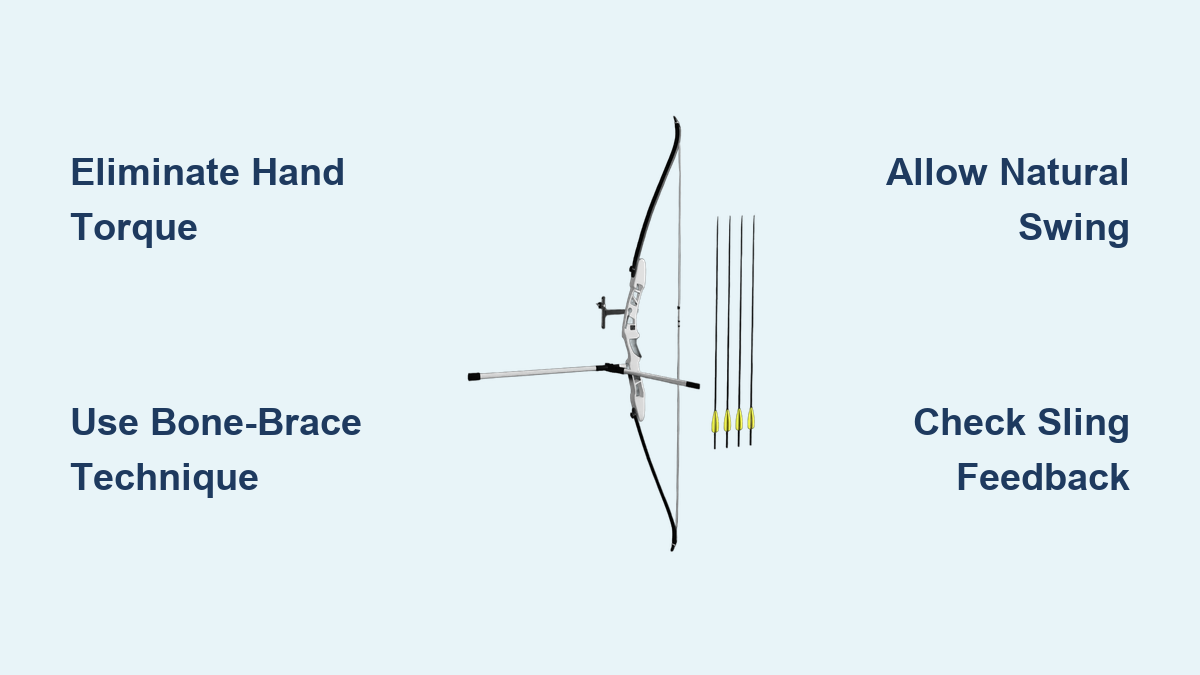
You’ve seen it in Olympic archery: the arrow flies toward the target, and the moment it leaves the string, the bow swings forward like a pendulum, often caught only by a thin cord around the archer’s fingers. It looks dramatic, almost theatrical. But this isn’t a flourish or accident. Archers drop the bow after shooting to eliminate hand torque and ensure a clean, interference-free release. This small movement is the visible proof of a technically perfect shot.
In elite target archery, especially Olympic recurve, accuracy at 70 meters demands near-flawless mechanics. A deviation of just 0.1° in hand position can send the arrow off target. To prevent this, archers use a passive hand hold, bracing the bow against the bone at the base of the thumb instead of gripping it. When done correctly, the bow naturally swings forward after release because nothing is holding it back. This drop confirms that no muscle tension, twist, or push affected the shot.
Eliminate Hand Torque Completely
The number one reason archers let the bow drop is to stop gripping. A tight grip, often called the death grip, is the enemy of accuracy. When muscles in the hand and forearm tense up, they introduce torque, or twisting force, that pushes the bow left or right at the moment of release. This tiny movement alters arrow flight and causes inconsistent groupings.
Use Bone-Brace Technique Instead of Gripping
Instead of gripping, Olympic archers use a bone-brace technique. The riser rests in the web of the hand, pressed firmly against the bony heel of the palm and the base of the thumb. The draw force pulls the bow into this bony shelf, stabilizing it without muscle tension. This turns the hand into a passive hook, nothing more.
Key elements of proper bone-brace form include:
- Bow rests against the bony heel of the palm, not the soft tissue
- Thumb base provides a stable shelf for the riser
- Fingers remain relaxed and curved, not wrapped tightly
- Elbow stays slightly bent to maintain skeletal alignment
When the release happens, there’s no hand movement to interfere. The bow is free to move, and that freedom results in the forward swing you see.
Prevent Post-Release Interference
Even after the arrow is gone, human instinct wants to control the bow. Archers may punch forward, squeeze at the last moment, or jerk the hand upward. These micro-movements, though invisible to the naked eye, ruin consistency.
By training to fully relax the hand and allow the bow to drop, archers eliminate all post-release forces. The swing becomes a litmus test: if the bow moves smoothly forward, the release was clean. If it jerks sideways or stays still, tension was present.
Use a Sling for Safety and Feedback

To prevent the bow from flying away, archers use a sling. The most common type in Olympic archery is the finger sling, a cord looped around the thumb and index finger, attached to the bow. When the bow drops, the sling catches it mid-swing.
Finger Sling vs Wrist Sling
The finger sling is preferred in target archery. It keeps the hand completely free and provides immediate feedback. The wrist sling is used more in traditional or hunting styles, but it’s less ideal for Olympic form because it can encourage hand tension or interfere with follow-through.
The sling is not a crutch. It’s a tool for technique development. It allows archers to fully trust their form without fear of dropping a $3,000 bow.
The Sling as a Diagnostic Tool
The way the bow swings tells a story about your technique:
- Smooth forward arc indicates a clean release with no grip tension
- Jerk or sideways kick suggests residual hand torque or imbalance
- No swing means likely gripping or holding on
- Backward tilt could indicate rear-weighted balance or improper anchor
Coaches often watch the swing more than the shot. A consistent swing means consistent mechanics.
Adjust Sling Length Correctly
Sling length matters. If it’s too short, the bow hits your palm too fast, cutting off feedback. Too long, and it swings wildly, risking leg contact.
Ideal length means the bow swings freely and is caught comfortably within 1 to 2 seconds. Test it by shooting with your eyes closed and focus on the sensation. The catch should feel soft, not abrupt.
Understand the Physics of the Swing
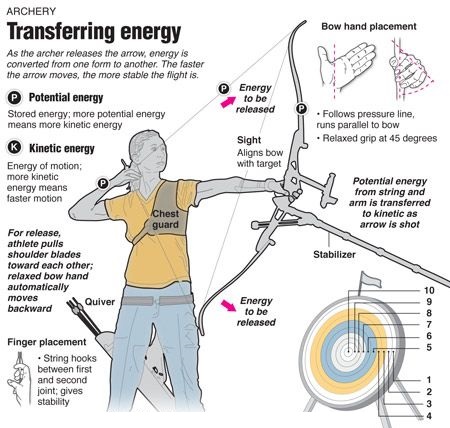
The bow drop is physics in motion. When the string is released, it accelerates forward, propelling the arrow. By Newton’s Third Law, the bow experiences an equal and opposite force, pushing it backward into the hand.
Front Stabilizers Encourage the Swing
Modern Olympic recurve bows use long front stabilizers, typically 24 to 36 inches. These rods shift the center of gravity forward, making the bow top-heavy. This forward balance increases stability during aiming, promotes a natural forward swing after release, and dampens vibration and hand shake.
Without stabilizers, like in barebow or traditional archery, the bow often doesn’t swing or may even tilt backward. That’s why the dramatic drop is mostly seen in target recurve disciplines.
Balance Affects Swing Behavior
The bow’s balance point determines how it moves post-release:
- Forward-balanced bows swing smoothly forward, ideal for feedback
- Rear-heavy bows may stay upright or swing back, which can encourage gripping
- Lateral imbalance causes side-to-side wobble, indicating misaligned side rods or improper form
Tuning stabilizer length and weight distribution helps achieve the desired swing pattern.
Achieve Shot Consistency
Human hands are inconsistent. Muscle fatigue, micro-tremors, and subconscious tension vary from shot to shot. To achieve elite-level repeatability, archers must remove the hand as an active variable.
Reduce Human Variables
By using bone-on-bone contact and eliminating muscular input, the hand becomes a fixed reference point. This allows the same forces to act on the bow every time, maximizing consistency.
As one elite coach puts it: we’re not trying to control the bow. We’re trying to get out of its way.
Follow-Through as Feedback Loop
In archery, follow-through isn’t just about form. It’s functional. The post-release phase, including the bow swing, arm extension, and body stillness, provides critical feedback.
A good follow-through means:
- Arm fully extended toward the target
- Shoulder down and relaxed
- Bow swinging freely forward
- Body motionless
If any of these are missing, it points to a breakdown in technique, often in back tension or release timing.
Know the Discipline Differences
The bow drop is not universal across all archery styles. It varies significantly depending on the discipline.
Olympic Recurve: Swing Is Standard
In Olympic recurve archery, the bow drop is universal. It’s a direct result of pistol-grip risers designed for bone contact, long stabilizers that promote forward swing, and finger slings that enable complete hand relaxation. Every top archer lets the bow swing. It’s not optional. It’s built into the technique.
Compound Archery: Rarely Used
Compound archers rarely let the bow swing, and for good reasons:
- Drop-away rests eliminate arrow-to-bow contact, reducing sensitivity to hand movement
- Let-off of 60 to 85% means less holding weight, making it easier to stay steady without a sling
- Heavier bows with sights, dampeners, and cables don’t swing easily
- Focus is on holding through the shot, not releasing cleanly
Most compound shooters use a light grip with a wrist sling for comfort, but they don’t rely on swing feedback.
Barebow: Variable Practice
Barebow archers fall in between. Some use a finger sling and allow a small swing. Others keep light hand contact for control. Since barebows lack stabilizers, the balance is more neutral. The bow may swing slightly forward, stay upright, or tilt backward. Swing is not a requirement. Consistency matters more than form.
Traditional and Hunting: Grip for Control
In traditional or hunting archery, archers usually maintain a light grip. They need rapid follow-up shots and often shoot from unstable positions like kneeling or moving. There’s less emphasis on millimeter-level precision, and safety in dynamic environments is priority.
One veteran hunter notes: I keep my hand on the bow. I don’t have time to watch it swing. I might be shooting again in two seconds.
Debunk Common Myths About the Bow Drop
Several misconceptions surround the bow drop. Let’s clear them up.
Myth: The Swing Improves Accuracy
The swing happens after the arrow leaves. It doesn’t affect flight. Its value is diagnostic, not functional. Accuracy is determined by draw consistency, anchor point, release quality, and equipment tuning. The swing just confirms that the release was clean.
Myth: All Archers Must Let the Bow Drop
The swing is specific to Olympic recurve. Compound, barebow, and traditional archers often don’t use it and don’t need to. Forcing a swing in the wrong discipline can harm form and create tension.
Myth: You Need to Force the Swing
The swing should happen naturally. If you’re trying to drop the bow, you’re likely tensing up or pushing it forward, both of which ruin accuracy. The goal is relaxation, not motion.
Myth: The Sling Helps You Aim
The sling has zero impact on aiming. It only secures the bow and confirms hand relaxation. Aim is controlled by sight alignment, anchor point, and back tension, not the sling.
Train the Technique Properly
The bow drop is a result, not a goal. Here’s how to develop proper technique at any level.
For Beginners: Focus on Relaxation
New archers should not obsess over the swing. Instead, focus on:
- Learning a consistent draw and anchor
- Keeping the bow hand relaxed
- Using a finger sling to build confidence
- Practicing on soft ground like grass or a mat to reduce fear of dropping the bow
The swing will come naturally as technique improves.
For Intermediate Archers: Use Swing as Feedback
Once fundamentals are solid, start using the swing to diagnose issues:
- Left or right swing could indicate shoulder misalignment or uneven back tension
- Jerk or stop suggests residual grip or flinching
- No swing means likely holding on, so work on hand relaxation
Record your shots or have a coach watch your follow-through.
Adjust Stabilizers for Optimal Swing
Tune your setup for a smooth, predictable swing:
- Front rod length: longer creates more forward swing
- Side rods: help stabilize and prevent wobble
- Weights: add to front or back to fine-tune balance
Ideal setup means the bow swings freely forward, catches cleanly in the sling, and doesn’t hit your leg.
Choose the Right Equipment
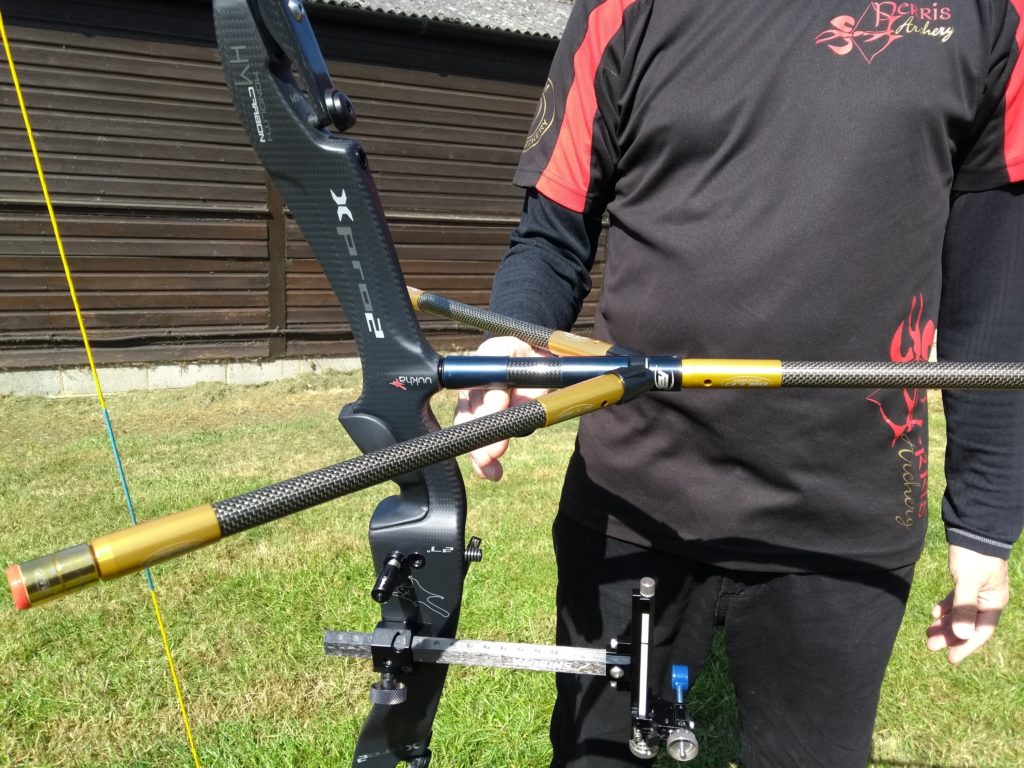
Equipment choices directly impact the bow swing.
Pistol-Grip Risers Enable Clean Release
Olympic recurve risers are designed with angled grips that position the hand for bone contact. This minimizes surface area and reduces torque risk. Look for risers with machined grooves for consistent hand placement and lightweight construction to enhance swing sensitivity.
Stabilizers Shape the Swing
Front rods of 24 to 36 inches promote forward swing and dampen vibration. Side rods of 12 to 24 inches improve lateral balance and reduce hand shake. V-bars and weights fine-tune center of gravity. More weight up front creates a smoother, more predictable swing.
Balance Is Key
Test your bow’s balance by holding it at full draw without drawing, relaxing your hand, and observing which way it wants to tilt. It should naturally tip forward. If it leans back, add front weight or shorten rear stabilizers.
Frequently Asked Questions About Why Archers Drop the Bow
Does dropping the bow improve accuracy?
No. The bow swing happens after the arrow has already left the string, so it has no effect on arrow flight. The swing is a diagnostic tool that confirms a clean, torque-free release, but it doesn’t directly improve accuracy.
Can beginners use the finger sling technique?
Yes, beginners can and should use a finger sling. It helps build confidence by preventing equipment loss and encourages proper hand relaxation from the start. However, beginners should focus on mastering draw, anchor, and release mechanics before worrying about the swing itself.
Why don’t compound archers let their bows swing?
Compound bows are heavier due to cams, cables, sights, and dampeners. They also use drop-away rests and have significant let-off, making the swing unnecessary. Compound archers focus on steadiness and control rather than passive release.
What happens if the bow doesn’t swing after release?
If the bow doesn’t swing, it usually indicates the archer is gripping or holding tension through release. This is a technical flaw that needs correction. The bow should swing freely to confirm a clean release.
Is the bow drop necessary in all archery styles?
No. The bow drop is specific to Olympic recurve archery and is used as a feedback mechanism. Barebow, traditional, and compound archers often maintain light hand contact and don’t rely on the swing for feedback or technique validation.
Key Takeaways for Understanding the Bow Drop
The bow drop is not a trick. It’s not for show. It’s the visible signature of precision, the silent proof that the archer did nothing wrong at the moment of truth.
The primary reasons archers drop the bow include eliminating hand torque and post-release interference, confirming a clean release via swing feedback, protecting expensive equipment with a sling, and enhancing consistency by removing human variables from the shot.
Remember that the swing is a result, not a goal. You don’t shoot well because you drop the bow. You drop the bow because you shot well. Whether you adopt it depends on your discipline. Olympic recurve archers should embrace it as essential. Compound archers need not bother. Barebow and traditional archers may find it optional.
Focus on relaxation, clean release, and proper form. The bow will drop when it’s supposed to, naturally, silently, and perfectly.