How to Make a Bow and Arrow from Flossers
You’ve seen the videos. Kids launching tiny darts across the room using nothing but dental floss picks and rubber bands. It’s not magic; it’s ingenuity. The viral trend of making a bow and arrow out of flossers has taken over TikTok, Pinterest, and Facebook, with parents, kids, and DIYers building miniature launchers from everyday items. Despite being called a “flosser bow,” it’s technically a mini slingshot powered by elastic tension, not bent limbs. This guide walks you through how to make a working flosser bow and arrow using just a few household items.
You will learn the two main build styles, how to assemble them safely, and tips for improving range and accuracy. Whether you’re crafting with kids, teaching physics concepts, or looking for a creative fidget project, this step-by-step breakdown ensures you get it right without risking injury or breaking school rules.
Choose Your Build Style
Before grabbing flossers, decide which type of launcher you want to build. The two main designs function differently and require slightly different materials.
Slingshot vs. Bow: Know the Difference
A true bow stores energy in its bent limbs. A slingshot stores energy in the elastic band. The flosser device is technically a slingshot because the plastic arms do not flex. The rubber band does all the work.
• Slingshot-style: Uses a rubber band stretched across two flosser arms. Best for power and ease of assembly.
• Bow-style: Uses the flosser’s dental floss as a bowstring. More authentic look, but less power.
Pick based on your goal: max range means slingshot, nostalgic charm means bow.
What You Will Actually Need
Forget complicated kits. You only need a few things.
• 2 or more dental floss picks (Oral-B, Colgate, or store brand)
• 1 rubber band (small or medium size)
• Dental floss, nylon thread, or fishing line (for optional reinforcement)
• Scissors or small cutter
• Tape (clear or duct tape)
• Arrow materials: Q-tip, toothpick, or second flosser with floss removed
Flossers cost under $10 for 100+ units, perfect for group builds or school projects.
Build a Slingshot-Style Flosser Launcher

This version packs more punch and is easier to assemble. It is the most popular design seen in viral videos.
Attach Two Flossers at the Base
Take two flossers and align their plastic handles side by side. Secure them tightly using:
• Tape: Wrap 3 to 4 layers around the base.
• Rubber band: Loop around both handles for a quick, removable bond.
• Glue (optional): For permanent builds.
Make sure the arms face the same direction and stay parallel.
Pro Tip: Reinforce the joint with a toothpick inserted between the taped handles for extra stability.
Stretch the Rubber Band Across the Tips
Loop a rubber band over the floss-end prongs of both flossers. Pull it taut and ensure it sits securely on both tips.
• Use a thicker rubber band for more power.
• Avoid over-stretching because it can snap or crack the plastic.
The rubber band is now your launching mechanism.
Load and Fire With a Projectile
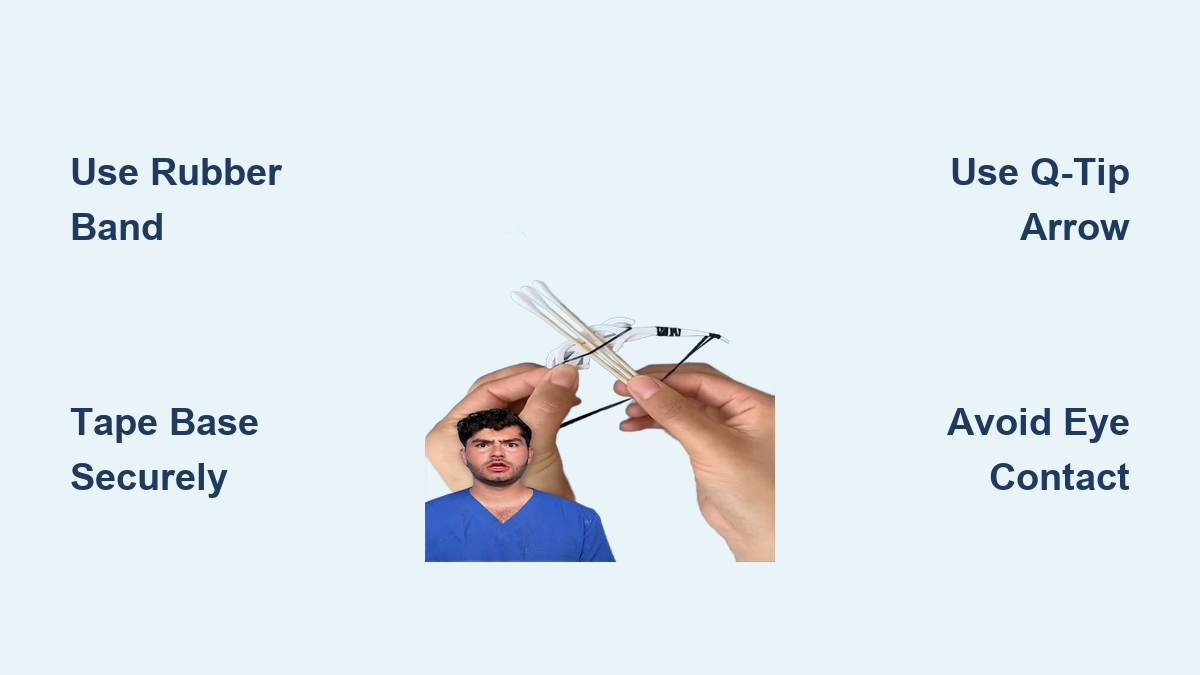
Use a lightweight dart such as a Q-tip (safest option), a toothpick, or a flosser with floss removed (plastic shaft only). Place the projectile under the center of the rubber band. Pull back with your fingers, aim, and release.
Warning: Never aim at people, animals, or glass. Use in open, clear spaces only.
Build a Bow-Style Flosser Launcher
This version mimics a traditional bow using the flosser’s built-in dental floss as the string.
Use One Flosser as the Bow Frame
Pick a flosser with tight, unbroken floss stretched between its prongs. This floss acts as your bowstring.
• If the floss is loose or frayed, replace it with nylon thread or fishing line.
• Tie strong knots at both ends to maintain tension.
Reinforce the Plastic Arms (Optional)
The flosser’s arms are not meant to bend. To prevent breakage, tape the base to reduce splitting. Avoid bending the arms outward because this increases stress. Slight tension is okay, but do not over-flex.
Craft a Flosser Arrow
Turn a second flosser into an arrow.
-
Remove the floss carefully.
-
Use the plastic handle as the shaft.
-
Add fletching by cutting small paper triangles and taping them evenly around the rear end.
Never sharpen the tip. Keep it blunt for safety.
Nock, Draw, and Release
Lay the arrow alongside the bow frame. Hook the back of the arrow against the floss string. Pull back gently and release.
• Range: 3 to 6 feet indoors, up to 10 feet with strong draw outdoors.
• Accuracy: Improves with balanced arrows and consistent release.
Upgrade Your Flosser Bow

Once you have mastered the basics, try these enhancements for better performance.
Reinforce the Frame
Weak joints break fast. Strengthen them with:
• Double-taping the base and arms.
• Side-by-side flossers taped together for rigidity.
• Toothpick bracing: Insert through taped sections for internal support.
Boost Power With Stronger Elastic
Standard dental floss will not last. Upgrade to:
• Fishing line (for bow-style builds)
• Thin elastic cord (for slingshot builds)
• Multiple rubber bands layered for more tension
Caution: Stronger elastic increases risk. Always supervise kids.
Improve Arrow Flight
A wobbling arrow will not hit the target. Fix it with:
• Symmetrical fletching: 3 evenly spaced paper fins.
• Weighted tip: A small piece of tape on the front.
• Straight shafts: Use undamaged flossers or toothpicks.
Test different designs to see what flies straightest.
Safety Rules You Must Follow
This is not a toy. It is a projectile device. Treat it with respect.
Avoid Eye Injury at All Costs
The biggest risk is eye damage. Even a Q-tip can cause harm at close range.
• Never aim at faces.
• Use in open areas away from people.
• Consider safety glasses during testing.
Remember: A comment on one viral video read “There goes an eye.” This is not a joke.
Use Only in Safe Environments
• Not for school: Possession may lead to suspension.
• No sharp tips: Never modify projectiles to be pointy.
• Supervise children: Especially under age 10.
Follow Legal and Ethical Guidelines
• It is not a real weapon, but can be mistaken for one.
• Avoid public use in parks or sidewalks.
• Do not post videos that encourage reckless use.
Why Kids Love This (And Parents Should Know)
This is not just a trend. It is part of a long tradition of schoolyard innovation.
Nostalgic Schoolcraft Culture
• 1990s: Kids made blowguns from straws.
• 2000s: “Hornets” from floppy disk metal.
• Today: Flosser bows go viral on TikTok.
One commenter recalled making mini blowguns in the 1990s and getting suspended. Another said his daughter has run through two bags of flossers with compound bows and mangled Q-tips all over the house.
STEM Learning Potential
Use this project to teach:
• Elastic energy converting to motion
• Aerodynamics through arrow design
• Material strength and why floss breaks
• Force and trajectory concepts
This is perfect for Cub Scouts, science fairs, or home learning.
Troubleshooting Common Problems
Even simple builds fail. Here is how to fix them.
Floss or Rubber Band Keeps Breaking
• Cause: Over-tension or weak material.
• Fix: Use fishing line or thicker rubber bands. Avoid full draws.
Arrow Flies Off Course
• Cause: Unbalanced weight or missing fletching.
• Fix: Add paper fins. Use straight shafts. Tape a small weight to the front.
Flosser Arms Crack or Split
• Cause: Stress at the base.
• Fix: Tape the joint before assembly. Do not over-bend.
Storage and Maintenance Tips
Make your flosser bow last longer.
Disassemble After Use
• Remove rubber bands to prevent fatigue.
• Store flossers flat in a dry place.
Avoid Heat and Sunlight
• Plastic warps over time.
• Keep in a cool, shaded drawer.
Replace Worn Parts
• Swap out frayed floss.
• Use fresh rubber bands for consistent power.
Frequently Asked Questions About Making a Bow and Arrow Out of Flossers
Can you really make a bow and arrow out of flossers?
Yes. You can build a working launcher using dental floss picks and a rubber band or floss string. While commonly called a “bow,” it functions more like a mini slingshot because the power comes from the elastic band, not bent limbs.
How far can a flosser bow shoot?
Most flosser bows shoot 3 to 10 feet, depending on the elastic strength and projectile weight. Indoor ranges tend to be 3 to 6 feet. Outdoor ranges can reach up to 10 feet with a strong draw.
Is making a bow and arrow out of flossers safe?
It can be safe with proper supervision and soft projectiles like Q-tips. The main risks are eye injury from close-range launches and broken plastic pieces. Always supervise children and use safety glasses during testing.
What is the best projectile for a flosser bow?
Q-tips are the safest and most recommended projectile. They are lightweight, soft, and unlikely to cause injury. Toothpicks are more powerful but also more dangerous. Never sharpen any projectile.
Can I use any brand of flossers to make a bow?
Most Y-shaped dental floss picks will work. Oral-B and Colgate are common brands. Avoid flossers with weak or thin plastic arms, as they may crack under tension.
How do I make a stronger flosser bow?
Tape two or more flossers together side by side for a more rigid frame. Use thicker rubber bands or multiple bands layered together. However, stronger builds also mean higher risk, so supervision is essential.
Key Takeaways for Making a Bow and Arrow Out of Flossers
Making a bow and arrow out of flossers is more than a viral stunt. It is a lesson in creativity, physics, and responsible play. Whether you build a rubber band slingshot or a floss-string bow, prioritize safety, supervise kids, and keep it fun.
Use soft projectiles, avoid aiming at people, and embrace the ingenuity behind this simple hack. When done right, it is not just a toy. It is a tiny triumph of DIY engineering powered by nothing more than a flosser and a dream.
The real skill is not in the shot. It is in knowing when not to fire.