How to Make Bow Limbs: A Simple Guide
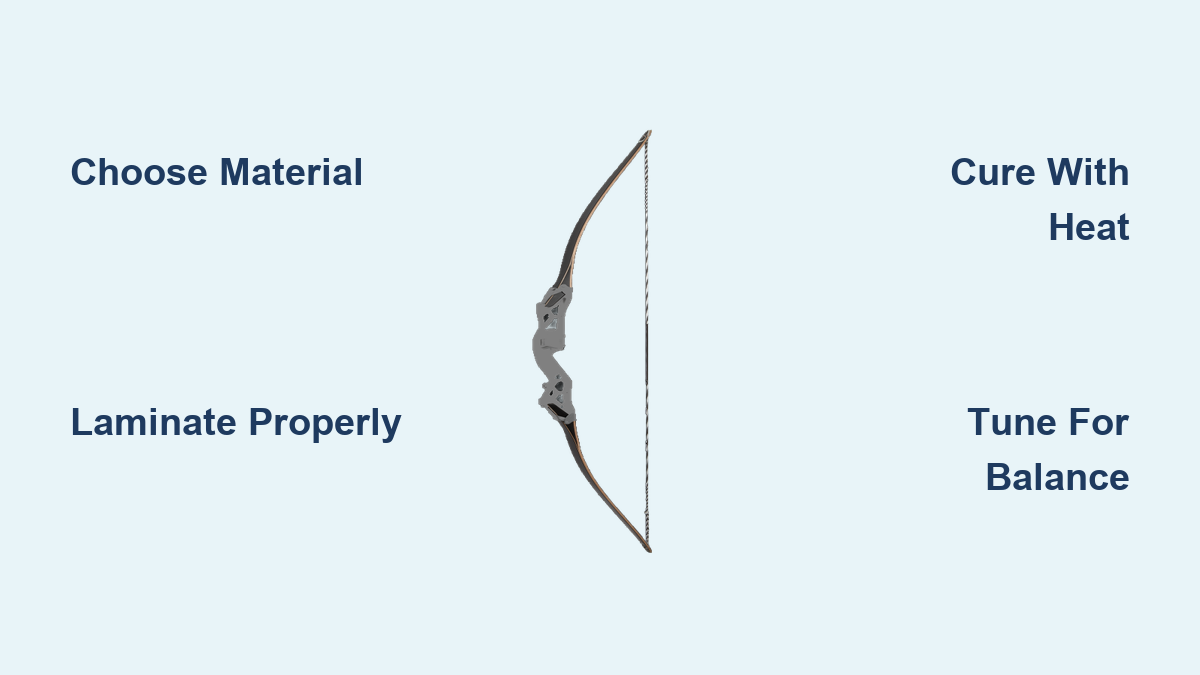
Making your own bow limbs is a satisfying craft that blends woodworking skills with engineering precision. Whether you’re repurposing old cross-country skis or laminating carbon fiber composites, understanding how to make bow limbs correctly ensures your finished bow delivers smooth performance and lasting durability. This guide walks you through material selection, lamination techniques, curing processes, and tuning methods used by experienced DIY bowyers.
You’ll discover how to choose between wood-only staves, laminated fiberglass limbs, and advanced carbon fiber layups. Every section includes practical steps, tool requirements, and pro tips gathered from real builders.
Choose Your Bow Limb Construction Method
The first decision every bowyer faces is selecting a construction approach that matches your skills and available tools.
Wood-Only Stave Bows
Carving a bow from a single piece of seasoned hardwood represents the most traditional method. Woods like hickory, osage orange, and yew offer excellent energy storage and natural resistance to splitting.
This approach works best for purists who enjoy hand-tool work and want an authentic traditional bow. The main challenge involves precise tillering to ensure even limb bend. Following the natural grain strictly prevents weak points that could cause sudden failure.
Laminated Wood and Fiberglass Limbs
Modern laminated construction bonds thin wood strips with fiberglass sheets using epoxy. The fiberglass handles tension on the back while wood manages compression on the belly, creating limbs that outperform solid wood in durability and consistency.
This method suits intermediate builders with access to a bandsaw and sander. The resulting limbs draw smoother, handle higher draw weights, and resist humidity changes better than traditional stave bows.
Ski Blanks for Takedown Bows
Cross-country skis make excellent beginner-friendly limb blanks because manufacturers engineer them to flex repeatedly. The pre-curved, tapered design saves hours of shaping work.
Look for skis at least 600mm long. Shorter pieces risk snapping under draw weight. Remove bindings carefully, then chisel off the plastic base to expose the wooden core. Thrift stores and online marketplaces offer affordable options for this budget-friendly approach.
DIY Carbon Fiber Layups
Advanced builders can achieve unmatched strength-to-weight ratios using carbon fiber cloth. Even without industrial vacuum equipment, sequential clamping combined with controlled heat curing produces excellent results.
This method requires more expertise but delivers professional-grade performance. Unidirectional carbon provides maximum strength along the limb length, while bidirectional cloth helps disperse stress at tips and attachment points.
Select the Right Materials
Your limb performance depends heavily on choosing appropriate materials and preparing them correctly.
Best Wood Species for Bow Limbs
Not all hardwoods work well for bow construction. Prioritize species with proven tensile and compressive strength.
Osage orange delivers exceptional performance with dense, flexible grain that holds shape beautifully. Hickory offers very good strength and remains readily available at reasonable cost. Yew provides classic longbow performance but has become difficult to source legally in some regions. Bamboo performs well when laminated in strips, offering flexibility and resilience. Maple serves best as a backing material in composite laminations rather than as a primary limb wood.
Always use wood with 8-12% moisture content. Wet or insufficiently seasoned wood warps during glue-up and causes delamination months later.
Fiberglass and Carbon Fiber Options
Bingham Projects’ Bo-Tuff fiberglass remains the DIY favorite for limb backs. One side features a smooth finished surface while the other provides grip for epoxy bonding. Cut this material with a Dremel cutoff wheel or metal shears rather than scissors, which fray the fibers. Always wear gloves when handling raw fiberglass to avoid irritating slivers.
Carbon fiber comes in two practical forms for DIY builders. Unidirectional cloth aligns fibers in one direction for maximum strength along the limb’s length, making it ideal for primary laminations. Bidirectional woven cloth spreads stress across multiple angles, working well for tip overlays and areas experiencing complex forces.
Epoxy Selection and Application
Slow-set epoxy with 30-45 minutes of working time allows even application and complete curing. Apply epoxy to the rough side of fiberglass and both sides of wood laminations during assembly.
Under-saturation leads to dry spots and eventual delamination. Over-saturation adds unnecessary weight and reduces flexibility. Finding the balance requires coating surfaces thoroughly but wiping away excess before assembly.
Essential Tools and Equipment Setup

Successful limb building requires specific tools, though you don’t need a professional shop.
Core Tools by Project Type
A bandsaw handles blank cutting and profile shaping for all methods. A drum sander smooths curves and thins edges during laminated and ski builds. Rasps and files enable hand-planing tapers with better control than machine tools. Chisels remove ski plastic and clean notches. Clamps and filament tape hold laminations securely during glue-up. Sandpaper in 80-400 grit ranges handles progressive finishing.
Building a Laminating Form
A custom laminating form ensures consistent limb shape during cure cycles. Construct this from four layers of half-inch plywood, cutting the top layer to your exact limb shape and using a flush-trim router bit to copy that profile to lower layers.
Install a quarter-inch steel index pin in the form’s center to align the riser block precisely. Add reverse taper strips, making them thinner toward the pin, to distribute clamping pressure evenly across the limb width. Line the working surfaces with plastic laminate to prevent the cured limb from sticking.
Pressure System and Heat Box
Uniform pressure produces even bonding across all laminations. An inflatable hose wrapped in filament tape, pressurized to 60 psi maximum, provides consistent clamping force without risk of blowout. Exceeding 60 psi risks damaging the limb or form.
A heat box or laminating oven cures epoxy strong and fast. Build this from half-inch plywood with incandescent bulbs providing heat through porcelain sockets. Add a thermostat to maintain 150-175°F during the four-hour cure cycle. Allow overnight cooling before removing the limb.
Shape and Prepare the Limb Blank
Proper geometry prevents stress fractures and ensures smooth, accurate shooting.
Taper Design Fundamentals
Limb taper must flow smoothly from thick at the riser to thin at the tips. Abrupt thickness changes create stress risers where cracks eventually form. Use a paper template folded in half to trace and mirror your limb shape, ensuring symmetry between left and right sides.
Hand-plane tapers rather than using a thickness planer. This gives you better feel for the wood and lets you respond to grain variations as you work.
Set the Limb Angle
The ideal limb angle measures approximately 10 degrees from vertical, never exceeding 15 degrees. Steeper angles raise the brace height unnecessarily and waste valuable draw length. Achieve your target angle through form design or careful hand shaping.
Prepare Riser Attachment Points
Drill a 15mm diameter hole 17mm from the limb base to accept the riser bolt. This hole must fit snugly. A loose fit causes pivoting and misalignment that ruins accuracy and creates safety hazards. Use a chisel or rasp to fine-tune the fit until the riser seats firmly.
Laminate the Limbs Step by Step
The lamination process transforms separate materials into a unified, powerful limb.
Glue-Up Procedure
Begin with a dry-fit in your heat box for 30 minutes to drive off surface moisture. Mix four ounces of slow-set epoxy and apply it to the rough side of your fiberglass and both sides of wood laminations.
Assemble pairs on wax paper before placing in the form. Lower the bottom fiberglass layer on your plastic-lined form, add wood laminations with the thick end against your index pin, set the riser block on top and press it onto the pin, then add upper laminations and the top fiberglass layer. Place a metal pressure strip on top to distribute clamping force.
Apply Pressure and Cure
Wrap filament tape around the assembly to prevent shifting during clamping. Lay the deflated pressure hose across the top and bolt your upper form in place. Pump the hose to 60 psi and verify alignment before moving to the heat box.
Bake the assembled limb for four hours at 150-175°F, then cool overnight before disassembly. Wear leather gloves when removing the cured limb, as epoxy edges can be razor-sharp.
DIY Carbon Fiber Layup Without Vacuum
Advanced builders can achieve professional results using wet layup techniques.
Stack and Saturate Carbon Cloth
Cut your unidirectional and bidirectional carbon cloth to size. Mix epoxy and manually saturate each layer by working resin through the fibers with a brush or squeegee. This wet layup approach won’t achieve perfect saturation, but sequential clamping walks out most air bubbles.
Layer saturated cloth between glass or aluminum plates with a silicone mat preventing sticking. Apply clamps one at a time, starting from the center and working toward edges. Use a caliper to verify consistent thickness across the entire layup.
Cure for Maximum Strength
Follow a two-stage cure cycle for best results. Initial cure at 75°C for eight hours allows epoxy to set and cool. After waiting 24 hours, post-cure at 85°C for four hours to complete cross-linking and maximize bond strength. Use thermostat-controlled heaters to maintain precise temperatures throughout.
Expect surface voids from open layup. Fill these with epoxy paste and sand smooth before use. Progress through 120 to 400 grit, never using coarser paper on carbon fiber as it creates deep scratches.
Finish and Assemble Your Bow
The final steps bring your limb from craft project to shooting equipment.
Cut String Notches and Install Overlays
File small grooves at each limb tip using a triangular file followed by a rat-tail file. Angle these notches approximately 70 degrees to the tabletop and round all edges contacting the string to prevent premature wear.
Cut tip overlays from wood or fiber block to fit your limb profile. Epoxy them in place and clamp overnight, then file flush with the limb edges and string grooves.
Make and Install the Bowstring
Cut nylon or Dacron string material approximately 120mm shorter than the notch-to-notch distance when your bow is assembled. Tie a bowline knot using the mnemonic “rabbit comes out of the hole, goes around the tree, and back into the hole.” Protect this knot with heat-shrink tubing and add a second piece at the center nock position. Briefly melt string ends to prevent fraying.
Attach a self-adhesive plastic arrow rest to protect your riser and improve accuracy.
Tune for Optimal Performance
A well-tuned bow shoots accurately and safely. A poorly tuned bow wastes energy and could fail catastrophically.
Tillering for Limb Balance
String your bow and measure from the riser end to the string on each limb. The shorter measurement indicates the stiffer limb. Lightly sand that limb’s fiberglass surface with 120-grit paper, removing tiny amounts and rechecking after each pass.
If imbalance persists, place the stiffer limb at the bottom of the bow when shooting. This subtle adjustment often solves persistent accuracy problems.
Correct Limb Twist
Use an 18-inch tiller stick to flex the bow and sight along each limb’s back. Mark the high side where the limb twists upward. Lightly sand that edge until the twist disappears and the limb lies flat when drawn.
Safety First During Construction
DIY bowmaking involves real risks that demand respect and preparation.
Always wear gloves when handling fiberglass or carbon fiber materials. Use eye protection and a dust mask whenever sanding or cutting. Ensure excellent ventilation when working with epoxy. Wear leather gloves when removing cured limbs from forms, as sharp epoxy edges cause deep cuts. Never exceed 60 psi in your pressure system. Test draw weight gradually, starting at six inches and increasing incrementally.
If you are under 18, obtain adult supervision before starting any bow-making project.
Frequently Asked Questions About Making Bow Limbs
What is the easiest method for beginners to make bow limbs?
Ski blanks offer the easiest starting point. Cross-country skis come pre-curved and reinforced, saving hours of shaping work. Remove bindings and plastic, then add string notches and a riser bolt hole. This approach delivers a functional takedown bow with minimal specialized equipment.
How long does it take to make bow limbs?
A simple ski blank project takes one weekend. Laminated recurve limbs require 2-3 days including cure time. Advanced carbon fiber layups need a full week accounting for material preparation, layup, multi-stage curing, and extensive surface finishing.
What wood is best for bow limbs?
Osage orange provides exceptional performance with excellent energy storage and durability. Hickory offers very good results at lower cost and greater availability. Yew delivers classic longbow feel but has become scarce. For laminated construction, bamboo strips work exceptionally well as core material.
Can I make bow limbs without a vacuum press?
Yes, sequential clamping achieves professional results without vacuum equipment. Apply clamps one at a time starting from the center to walk air bubbles toward edges. Use thermostat-controlled heat to ensure proper epoxy cure. While vacuum bagging produces better fiber-to-resin ratios, wet layup limbs perform excellently for recreational use.
How do I prevent delamination in my bow limbs?
Prevent delamination by ensuring wood moisture content stays below 12% before glue-up. Apply epoxy to both surfaces being joined and avoid under-saturation. Use slow-set epoxy with adequate working time for even application. Cure at proper temperatures, never exceeding manufacturer recommendations. Store your finished bow unstrung to reduce ongoing stress on laminations.
Key Takeaways for Building Your Own Bow Limbs
Making bow limbs successfully requires matching your skill level to appropriate construction methods. Start with ski blanks if you’re new to bowmaking, then progress to laminated fiberglass builds as your skills develop. Carbon fiber layups reward experienced builders with exceptional performance.
Precision matters throughout the process. Use templates to ensure symmetry between limbs. Measure twice and cut once. Verify alignment during every assembly stage. Rushing or skipping verification steps leads to disappointing results.
Patience during tuning separates accurate bows from frustrating ones. Take time to till both limbs equally and correct any twist before shooting. The effort invested in proper tuning pays off every time you draw and release.
Now gather your materials, set up your workspace, and start building. Every limb you craft brings you closer to mastering this ancient craft.