How to Measure a Recurve Bow: Step-by-Step Guide
If you’re replacing a string or buying accessories, knowing how to measure a recurve bow correctly is essential. Many archers make simple mistakes like measuring tip-to-tip or following the riser’s contours, which leads to poorly fitting strings and reduced performance. The correct method follows the AMO standard used by manufacturers and professional string makers worldwide. This guide walks you through the exact steps to measure your recurve bow accurately, avoid common errors, and select the right string length for optimal shooting.
Measure Along the Back from Groove to Groove
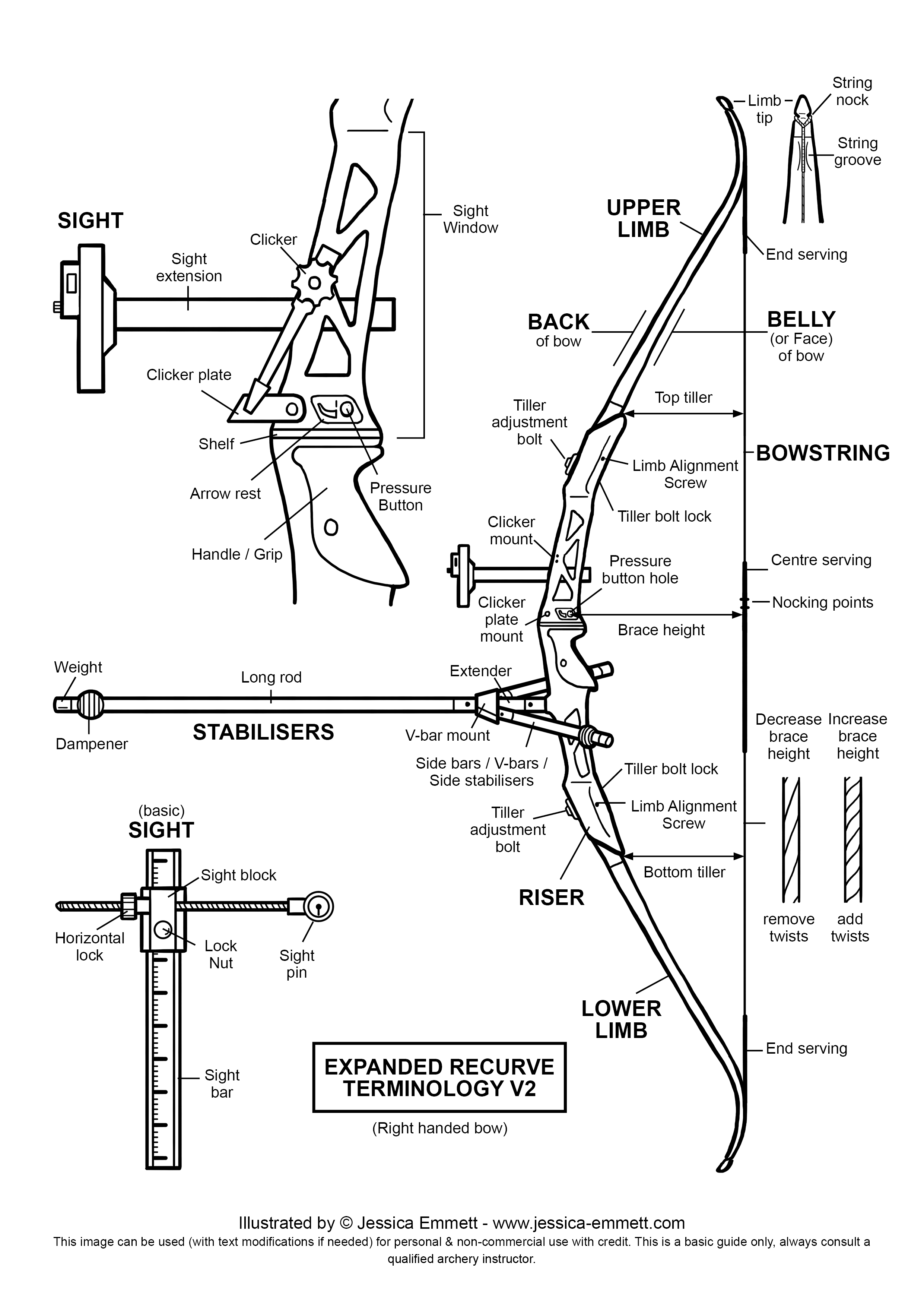
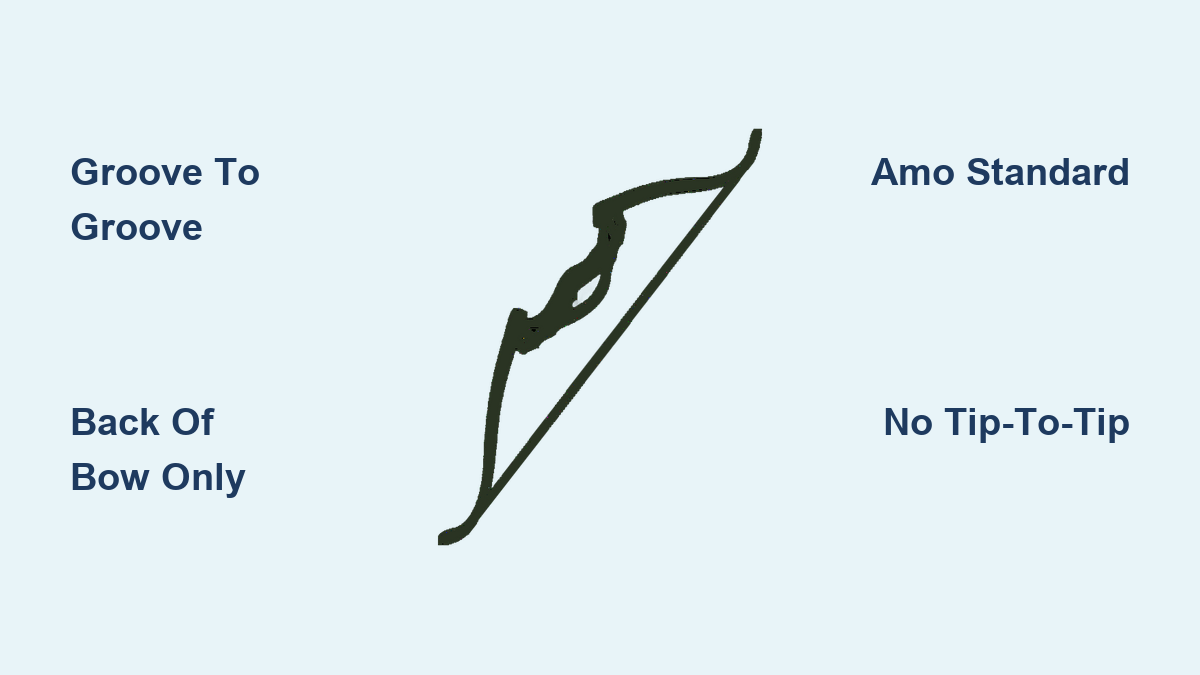
The official recurve bow length is measured along the back of the bow, starting and ending at the string grooves. This method accounts for the curved limbs and provides the standardized measurement string makers use.
Step-by-Step Measurement Process
- Unstring your bow completely and lay it on a flat surface.
- Locate the string grooves at the end of each limb where the string sits.
- Place your flexible tape measure at one string groove and follow the back of the limb along its curve.
- Draw a straight line across the riser between the two limb attachment points.
- Continue along the second limb’s back to the opposite string groove.
- Record the measurement as your AMO bow length.
Pro Tip: Use a tailor’s tape or painter’s tape instead of a rigid ruler. These flex easily along limb curves and give accurate readings.
Avoid These Common Measurement Mistakes

Even experienced archers sometimes measure incorrectly. Here’s what to avoid.
Measuring Tip-to-Tip
Measuring in a straight line from limb tip to limb tip ignores the recurve curves and underestimates true length. A bow that measures 70.5″ tip-to-tip might actually be 74″ when measured properly along the curvature.
Following the Riser’s Belly
Many risers have ergonomic shaping on the archer-facing side. Following these contours adds extra inches and invalidates the measurement. Always follow the back of the bow, which faces the target.
Remember: The bow likes you face to face. Your face is opposite the back, so measure along the back.
Assuming Math Adds Up
You cannot always calculate bow length by adding riser size to limb length. Limb pocket depth, curvature, and manufacturer design affect the final measurement. Always measure physically rather than relying on arithmetic.
Understanding AMO Standard Length
The Archery Manufacturers and Merchants Organization established the standard way to measure recurve bows. This standard has been used since the 1960s and ensures consistency across all brands.
What AMO Length Means
The AMO bow length is measured unstrung, from string groove to string groove, following the back path and cutting straight across the riser. The recommended string length is typically 3 inches shorter than the AMO length. For example, a 68″ AMO bow uses a 65″ string.
Note: Strings are sold by bow length, not their physical length. A “68-inch string” fits a 68-inch bow but physically measures about 65 inches.
Choose the Right String Length
Once you know your AMO length, selecting a string is straightforward using standard guidelines.
General String Length Chart
| Bow AMO Length | Recommended String Length |
|---|---|
| 66″ | 63″ |
| 68″ | 65″ |
| 70″ | 67″ |
| 72″ | 69″ |
| 74″ | 71″ |
When to Adjust Your String Choice
Some factors may require deviation from standard rules. Aggressive recurve limbs like those on 3Rivers DAS bows often need slightly longer strings. String material affects stretch, with FastFlight less elastic than Dacron. Competitive archers also fine-tune string length for ideal brace height and shot silence.
Expert Advice: The best way to find the right string for an unknown bow is to try a few lengths until the bow shoots quietly.
Real-World Measurement Examples

These actual user experiences show why proper technique matters.
Case 1: Gillo GT 29 Riser with Winners Motive C5 Long Limbs
The expected length was 74 inches. Initial tip-to-tip measurement gave 70.5 inches, which was too short. After measuring groove-to-groove along the back path, the correct measurement was 74 inches.
Case 2: Bernardini Luxor 27 Riser with ILF Long Limbs
Expected length was 72 inches. Proper groove-to-groove measurement yielded 74 inches, exceeding expectations due to unique limb design or pocket angle.
Case 3: Vintage Black Hawk Mosquito 766
This older bow measured 51 inches tip-to-tip. Following the correct AMO method from groove to groove confirmed it needed a 47 to 48-inch physical string, sold as a 51-inch string.
Required Tools for Accurate Measurement
You don’t need expensive equipment, but using the right tools prevents errors.
Flexible Tape Measure
A tailor’s tape or flexible measuring tape works best because it follows limb curves easily and gives instant readings.
Painter’s Tape or String Method
If you lack a flexible tape, use masking tape laid along the measurement path. Mark both ends, remove the tape, and measure flat with a ruler.
Warning: Avoid stretchy nylon cord. One user reported a 2-inch difference between string measurements and tape measurements due to material stretch.
Decode Your Limb and Riser Labels
Understanding component labels helps predict bow length before measuring.
Standard Riser Sizes
Most risers come in 23-inch, 25-inch, 27-inch, and occasionally 29-inch sizes. The 25-inch riser is the most common.
Limb Length Classifications
When paired with a 25-inch riser, short limbs produce a 66-inch bow, medium limbs produce a 68-inch bow, and long limbs produce a 70-inch bow. These labels assume a standard 25-inch riser, so a 27-inch riser with long limbs yields approximately 72 inches.
Confirm Before Buying Strings
When uncertain about your measurement, consult a professional string maker.
Information to Provide
Give the string maker your riser brand and model, limb brand and model, measured AMO length, desired brace height, and preferred string material. Top string makers like Champion Bowstrings use this information to build custom strings optimized for your setup.
Frequently Asked Questions About Measuring Recurve Bows
What is the correct way to measure a recurve bow?
Measure from string groove to string groove along the back of the bow, going straight across the riser. This gives you the AMO standard length used for ordering strings.
Why shouldn’t I measure tip-to-tip?
Tip-to-tip measurement ignores the curved recurve shape and underestimates true length. The actual length can be 3 to 4 inches longer than tip-to-tip measurements suggest.
What is the AMO standard for recurve bows?
AMO length is measured unstrung, from string groove to string groove, following the back path and cutting straight across the riser. String length is typically 3 inches shorter than the AMO bow length.
How do I choose the right string length for my bow?
Subtract 3 to 4 inches from your AMO bow length. A 68-inch bow typically uses a 65-inch string. Adjustments may be needed for aggressive recurves or specific brace height preferences.
Can I calculate bow length from riser and limb sizes?
Not reliably. While a 25-inch riser with long limbs typically yields a 70-inch bow, variations in pocket depth and limb curvature mean you should always measure physically rather than calculating.
What tools do I need to measure my recurve bow?
A flexible tape measure works best. If unavailable, use painter’s tape or non-stretch string laid along the measurement path, then measure flat with a ruler.
Key Takeaways for Measuring Your Recurve Bow
Knowing how to measure a recurve bow correctly ensures you get the right string, achieve optimal brace height, and keep your bow performing at its best. Always measure from string groove to string groove along the back of the bow, cutting straight across the riser. Avoid common mistakes like tip-to-tip measurement or following riser contours. Use flexible measuring tools and double-check unexpected results. When in doubt, consult a professional string maker with your measured AMO length and bow specifications. Following the groove-to-groove back-side method is the gold standard every archer should use for accurate measurements.