How to Refinish a Recurve Bow: Step-by-Step Guide
You found an old recurve bow in the attic, its finish cracked and wood dull. It looks like trash, but it’s actually a restoration waiting to happen. Refinishing a recurve bow breathes new life into forgotten gear, restoring both beauty and performance whether you’re reviving a vintage Bear, tuning a family heirloom, or upgrading a worn limb set. This guide delivers the exact steps, tools, and pro tips used by expert restorers. You’ll learn how to safely strip old finishes, seal every surface, and apply a durable finish that protects for years.
Assess Structural Integrity First
Before sanding or stripping, verify the bow is not hiding damage that could fail under tension.
Check for Cracks and Delamination
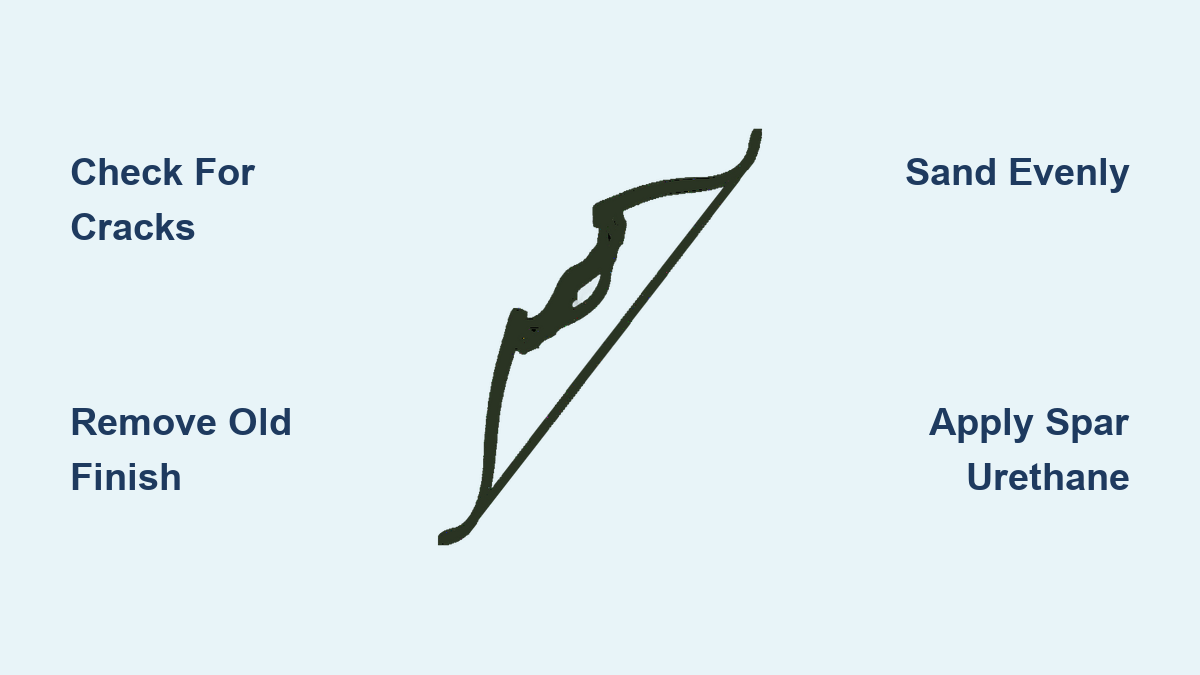
Inspect both limbs and riser under bright light. Run your fingers along the fiberglass backing and limb edges. Look for these issues:
• Hairline cracks near the tips or nocks
• Bubbling or separation between wood and fiberglass layers
• Twisted limbs or uneven camber when unstrung
If fiberglass is cut through by a deep gouge, the bow is compromised. Do not proceed with refinishing.
Vintage models like Wing Archery bows are especially fragile. Professional restorers often refuse these due to risk of breakage and irreplaceable decals.
Test Draw Weight and Tiller
String the bow and measure draw weight at 28 inches. Record these numbers as they guide adjustments and confirm balance after refinishing. Measure tiller by checking the distance from string to limb at 6 inches from the riser.
Shoot a few arrows and listen for vibrations or uneven flex, which are signs of internal damage.
Remove All Accessories Safely

Clear the path for full surface access. Every component must come off before refinishing begins.
Detach Arrow Rest and Hardware
Unscrew or peel off the arrow rest. Remove sight mounts or stabilizer hardware. Label and bag all screws since many are custom-threaded.
Lift the Medallion Without Damage
Apply gentle heat with a hair dryer to soften adhesive. Slide a thin putty knife under one edge and lift slowly to avoid gouging the wood beneath. Even if the medallion is dull, it can be cleaned and reinstalled.
Note the serial number to track model, year, and original specs.
Strip Old Finish Without Hurting Fiberglass
The goal is removing decades of grime and varnish without sanding through the thin fiberglass layer.
Scrape Off Bulk Finish First
Use a blunt blade or dull cabinet scraper. Hold at a 30-degree angle and lift flaking material like ice off a windshield. This method removes 80% of old finish with zero risk to fiberglass.
Avoid chemical strippers. They can degrade glue in laminations or eat through fiberglass.
Hand-Sand with Controlled Grit Progression
After scraping, sand by hand. Never use power sanders on curved limbs.
Start with 120 grit to smooth high spots. Move to 180, then 220 for final prep. For glass-smooth results, progress to 350, 480, 600, and up to 1100 grit wet/dry paper.
Sand with the grain on wood risers. On limbs, follow the curve without gouging edges.
Clean with Acetone Between Stages
Wipe the entire bow with acetone after each sanding step. It lifts fine dust and removes oily residues that block finish adhesion.
Never use denatured alcohol on modern lacquers and epoxies.
Repair and Modify for Performance

This is where restoration becomes customization. Address imperfections and functional modifications during this phase.
Remove Glue and Fill Holes
Apply Goo Gone or citrus-based remover for tacky residue. Scrape hard glue with a razor at a shallow angle. Fill old screw holes with epoxy putty for strength or wood filler color-matched to the riser. Sand smooth and re-drill only if necessary.
Thin Limbs to Reduce Draw Weight
Want to drop from 47 pounds to 40 pounds? Focus on the numerical center of each limb, not the belly curve. Remove material from the belly side to preserve energy transfer.
Mark removal zone with a template. Sand with 120, 180, then 220 grit. Round the fiberglass edges to prevent stress fractures. Re-string and check draw weight after each pass. Stop at your target weight.
Never rush the thinning process. Over-thinning ruins balance and tiller.
Smooth Tips and Preserve Geometry
Blend rough tip transitions into a radius curve for better feel and aesthetics. Do not alter limb hooks or string grooves since they are precision-machined.
Yellowed fiberglass indicates UV damage and cannot be sanded out. If structurally sound, leave it in place.
Prepare Surface for Flawless Finish
One speck of dust can ruin a perfect coat. Preparation is non-negotiable.
Wipe with Denatured Alcohol
After final sanding, wipe the entire bow with denatured alcohol. It removes microscopic oils, raises wood grain for better absorption, and ensures a contaminant-free surface.
Let dry, then lightly resand with 220 grit to smooth raised fibers.
Control Dust and Environment
Work in a closed, fan-free room. Cover floors with drop cloths. Wear clean gloves since fiberglass dust embeds easily and causes bumps under finish.
Do final prep and finishing in the same session. Do not let the bow sit exposed between stages.
Choose and Apply the Right Finish
Your finish is your bow’s armor. Pick wisely based on durability and ease of application.
Top Recommended Finishes
Several finishes work well for recurve bows:
• Helmsman Spar Urethane spray: flexible, crack-resistant, durable
• Tru-Oil: warm tone, easy repair, may yellow white limbs
• Watco Danish Oil with wax: natural look, forgiving, slow build
• Automotive clearcoat: factory finish, tough, needs spray gun
• Crystal Cabinet Finish: waterproof, heat-resistant, requires mixing
Apply Thin, Even Coats
Shake spray cans well. Hold 10 to 12 inches from surface. Use light, overlapping passes. No dousing allowed.
Let dry 15 to 20 minutes between coats. Apply 3 to 4 coats minimum. For oils, wait 24 hours between coats.
Sand Between Coats
Use 0000 steel wool or 400-grit wet/dry paper to dull the surface slightly. This improves adhesion. Wipe clean with acetone before the next coat.
Never build thick finish. Excess adds weight and can affect tiller.
Reassemble with Precision
Now make the bow shoot-ready.
Install a New B55 String
Old strings stretch and weaken. Always replace with B55 material, which is low stretch and durable.
Build on a string jig or order pre-made. Apply center serving directly on the bow for perfect nock fit. Tie on a knock point with shelf material or thread.
Replace Strike Plate and Rest
Fabricate a new strike plate if dented or missing. Reuse the original arrow rest if functional. Prefer radius-profiled shelves over modern elevated rests for traditional balance.
Reattach Medallion Securely
Clean adhesive bed and medallion edge. Use Black Star Bond Coer or equivalent high-strength glue. Press firmly and let cure 24 hours before shooting.
Test and Verify Performance
Do not assume it shoots true. Prove it.
Confirm Draw Weight and Tiller
Re-measure draw weight. It should match target within plus or minus 1 pound. Tiller must equal pre-refinish measurements. Check limb straightness for twist or camber shift.
Shoot a Test Round
Use known good arrows. Shoot 10 to 15 times. Note smooth draw cycle, no vibrations or limb slap, and consistent grouping.
Inspect Finish Under Multiple Lights
Check under natural daylight, fluorescent light, and backlight. Look for runs, bubbles, dust specks, or missed spots. Touch up with a toothpick and thinned finish if needed.
Mark and Maintain the Bow
Make your work last.
Label the New Draw Weight
Use a fine permanent marker. Write clearly on the limb, for example, “40 pounds at 28 inches.”
Schedule Maintenance
Tru-Oil and tung oil need reapplication every 1 to 2 years. Spar urethane and automotive finishes need annual inspection but no re-coat unless chipped.
Store unstrung in a dry place to prevent set.
When to Hire a Pro
Some jobs are not DIY.
Seek Expert Help If
• Deep gouges in fiberglass exist
• Vintage or collectible bow requires restoration
• Silk screen or full tip replacement is desired
• No spray equipment is available for automotive clearcoat
Professional services like Bob Lee Refinishing offer tip-to-tip restoration, new strings, fresh silkscreens, and draw weight adjustment.
Frequently Asked Questions About Refinishing a Recurve Bow
Can I refinish a bow with delaminated fiberglass?
No. If fiberglass layers have separated or bubbled, the structural integrity is compromised. Proceed only if the fiberglass is intact and undamaged.
What is the fastest way to remove old finish?
Scraping with a blunt blade removes bulk finish quickly with minimal risk to fiberglass. It works especially well on 1970s bows where the finish naturally wants to flake off.
Should I use chemical strippers on my recurve bow?
No. Chemical strippers can degrade glue in laminations and damage fiberglass overlay. Stick to scraping and hand-sanding instead.
How long does refinishing take from start to finish?
Plan for 1 to 2 weeks accounting for drying time between coats. Actual work time is 8 to 12 hours spread across multiple sessions.
Can I adjust draw weight while refinishing?
Yes. Symmetrical limb thinning can reduce draw weight by 5 to 10 pounds. Sand the belly side of both limbs equally and remeasure after each pass.
What finish do professionals recommend most?
Helmsman Spar Urethane in spray cans is the top choice for most restorers. It offers crack resistance, durability, and a factory-like finish without needing professional spray equipment.
Key Takeaways for Refinishing Your Recurve Bow
Refinishing a recurve bow is a rewarding project that transforms forgotten gear into a functional, beautiful shooter. The process requires patience, careful attention to structural integrity, and respect for the materials. Always inspect for cracks and delamination before starting, use hand-sanding rather than power tools on limbs, and apply thin coats of durable finish like spar urethane.
Symmetry is sacred throughout the entire process. Uneven sanding ruins tiller and balance. Take your time with each stage, clean between coats, and test thoroughly before shooting. With 220-grit sandpaper, acetone, spar urethane, and a B55 string, even a spray-painted relic can become a pride-worthy shooter that lasts generations.