How to Choose a Cello Bow: Expert Tips
Choosing the right cello bow is one of the most impactful decisions a cellist can make. The bow acts as the dynamic interface between player and instrument, shaping tone, articulation, dynamics, and expressive control. A well-matched bow can unlock the full sonic potential of your cello, while an incompatible one can frustrate even the most skilled player. Whether you are a beginner purchasing your first real bow or a professional seeking an upgrade, this guide walks you through the essential factors to consider.
This article covers balance, weight, materials, testing methods, and pricing to help you find a bow that feels like an extension of your arm. You will learn how to evaluate tonal compatibility, what to look for during testing, and where to find the best options within your budget.
Balance: The Most Important Factor
The way a bow balances in your hand affects everything from tone control to playing endurance. Balance often matters more than total weight when selecting a cello bow.
Find the 9-Inch Balance Point
A well-balanced cello bow typically balances 9 to 9.5 inches from the tightening screw at the frog. To test this, tighten the bow hair and place your pinky under the stick at the 9-inch mark. A good bow will rest level without tipping forward or backward.
Bows that balance too far toward the frog can feel sluggish and require extra pressure for volume. Tip-heavy bows fatigue the wrist and reduce precision, especially in fast passages. Even a heavier bow around 82 grams can feel light and agile if properly balanced, so focus on feel rather than grams.
Why Balance Affects Sound
A balanced bow distributes effort evenly across the stroke, allowing smooth transitions from frog to tip. This leads to consistent tone throughout the bow length, less physical strain during long legato lines, and better control in spiccato and string crossings. Players often report that a balanced bow comes alive in the hand, responding instantly to subtle shifts in weight and speed.
Weight: Finding Your Sweet Spot
Cello bow weights typically range from 75 to 85 grams, with 80 grams being the average. Most professionals prefer bows between 78 and 82 grams.
Light vs. Heavy Bows
Light bows in the 75 to 78 gram range excel at fast articulation, spiccato, and string crossings. However, they may lack power in sustained forte passages. Medium-weight bows from 78 to 82 grams offer balanced performance across most styles and suit most players and cellos. Heavier bows from 82 to 85 grams provide deep, resonant tone and strong projection but risk causing fatigue if poorly balanced.
Differences of 3 to 4 grams are rarely noticeable in volume. Technique, including bow speed, pressure, and contact point, matters far more than weight alone. A heavier bow does not automatically produce a louder sound, and poorly matched heavy bows often lead to pressing and tension.
Testing Strength and Spring
A bow must be strong enough to resist collapsing under pressure, yet flexible enough to respond to delicate changes in touch.
Perform the Spring Test
Hold the bow horizontally and gently press down on the center of the stick. A high-quality bow will flex smoothly and rebound quickly when released. Avoid bows where the stick touches the hair when pressed, as this indicates insufficient strength for full-toned playing.
Stiff vs. Springy: What Works for You
Stiff bows react quickly but may produce a shallow, bright sound. They suit aggressive players who press into the string. Flexible bows offer rich tone and smooth legato but may lag in staccato or spiccato. The best bows combine resilient spring, storing and releasing energy like a whip.
Listen for responsiveness during testing. Does the bow grab the string cleanly in off-the-string strokes? Does it sustain long notes without skittering?
Evaluating Tonal Enhancement
Your bow should reveal your cello’s voice, not mask it.
Does It Draw Out the Sound
Play a long C-string note at medium bow speed and moderate pressure. A compatible bow will produce a full, immediate tone, reveal overtones and harmonic richness, and require minimal effort to project.
Some bows act like a blanket, muting resonance or making the cello sound smaller. The right bow is more like focusing a lens, bringing clarity and dimension to the sound. One player noted that their old bow muffled their cello, while the new one opened it up like they had never heard before.
Checking Lower String Activation
The true test of compatibility lies in how easily the bow speaks on the C and G strings.
Conduct the C/G String Test
Play a short note near the middle of the bow, just past the winding. Avoid the frog where scratchiness is common on any bow. Listen for instant response with no hesitation or flutter and fullness without forcing.
If a bow does not work well on the C and G strings, it is not the right bow for your cello. Some cellos reject bows that fail this test, even if they are expensive or highly rated. Compatibility is acoustic, not financial.
Comparing Bow Materials
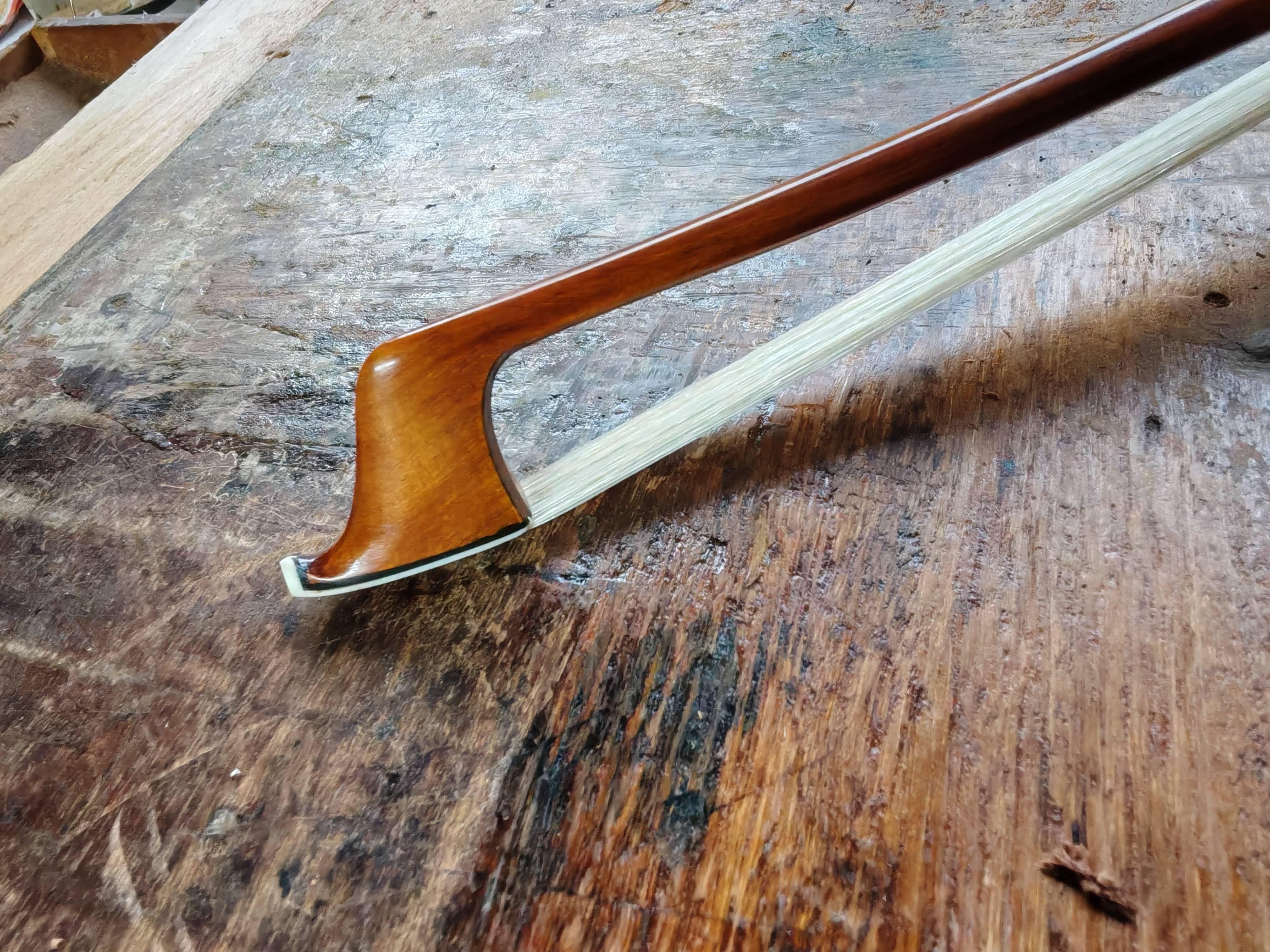
The stick material impacts tone, durability, and price. There is no single best material, only what works for your cello and playing style.
Pernambuco: The Gold Standard
Pernambuco offers unmatched elasticity, tonal depth, and nuance. However, it is rare, expensive, regulated under CITES, and inconsistent due to natural grain. This material is best for professionals seeking expressive range. Once the only choice for top players, pernambuco remains the benchmark, especially vintage French bows by Tourte or Peccatte. But supply is shrinking, and top-grade wood is now scarce.
Carbon Fiber: Modern Equal
Carbon fiber bows are durable, weather-resistant, consistent, and low maintenance. Premium brands include Arcus, Coda Bows, and JonPaul, with prices ranging from $1,000 to $3,000. Modern carbon fiber bows rival high-end pernambuco in tone and responsiveness. Many touring and orchestral players choose them for reliability.
Some cellos sound better with carbon fiber than wood. Material does not determine compatibility.
Ipe: Best Intermediate Option
Ipe, also known as Brazilian walnut, is dense, stable, responsive, legal, and affordable. Performance approaches lower-grade pernambuco, with prices from $300 to $700. This material is ideal for advancing students and serious amateurs.
Ipe has become a mainstream upgrade from basic brazilwood, offering durability and tonal improvement without regulatory issues.
Brazilwood: Entry-Level Wood
Brazilwood is inexpensive and widely available but softer with slower response and less projection. It is often used in fractional bows for beginners. Acceptable for beginners but not for advancing players.
Fiberglass: For Trial Use Only
Fiberglass bows cost $50 to $100 and offer poor articulation, dull tone, and limited dynamics. Only consider this option if you are uncertain about continuing cello. Avoid long-term use, as these bows hinder technical development and musical expression.
Understanding Shaft Shape and Design

Small design choices affect feel and sound.
Round vs. Octagonal Shafts
Round shafts are standard in the French tradition and offer balanced flexibility and tone. Octagonal shafts are stiffer due to structural rigidity and can sound harsh if overdone.
Some brands market octagonal shafts as premium, but this is often misleading. A stiffer shaft is not better, just different. Preference is personal, so try both if possible.
Frog and Mountings
Frogs are usually ebony with imitation tortoiseshell. Gold or silver fittings reflect craftsmanship but do not improve sound. Ensure the frog fits snugly and the screw turns smoothly. Lightweight frogs can shift balance toward the tip.
Do not be swayed by shiny mountings. A $200 bow with simple fittings may outperform a $2,000 bow with gold trim.
Testing Bows Properly
Bias from price, brand, or appearance can distort judgment. Test systematically to compare bows accurately.
Pre-Playing Checks
Hold the bow at 45 degrees to check if it feels stable. Inspect alignment by looking down the stick; a slight curve toward the hair is normal, but a bend away is bad. Check that the screw tightens and loosens smoothly. Tap the stick lightly; high-quality bows vibrate with a clear, sustained ring.
Play These Test Passages
For power and legato, try the Elgar Concerto opening or Brahms E minor Sonata. For string crossings, play Bach Unaccompanied Suites. For spiccato and speed, use Dvořák Concerto opening or Popper’s Dance of the Elves. For fast string changes, try Sevcik exercises or Wieniawski Etudes-Caprices.
Play the same short passage on each bow for direct comparison.
Test All Bow Zones
Evaluate performance at the frog, middle, and tip. Does the frog produce a clean, full tone? Is the response even in the middle? Can you control dynamics without skittering at the tip?
Many weak bows falter just past the midpoint, causing players to tense up. Inconsistency in the upper half is a red flag indicating poor balance or weakness.
Matching the Bow to Your Level
Your stage of development should guide your choices.
Beginners: Prioritize Ease and Comfort
Look for bows that respond easily with minimal effort. Carbon fiber or Ipe in the $100 to $400 range works well. Avoid stiff or heavy bows that encourage tension. Plan to upgrade within one to two years as technique improves.
Intermediate and Advanced Students
Try 6 to 8 bows side by side. Focus on tonal color, articulation, and balance. Consider joining a school or shop testing program. Budget from $300 to $1,000.
This is when you begin to develop a personal voice. A better bow can accelerate technical growth.
Professionals: Seek Expressive Range
Invest in high-grade pernambuco or premium carbon fiber. You may want multiple bows for different repertoire. Prioritize projection, dynamic control, and reliability. Budget from $1,000 to $20,000 or more.
Many professionals own both wood and carbon bows, one for concerts and one for travel.
Smart Buying Tips
Make your purchase decision with confidence.
Bring Your Cello and Current Bow
Test new bows on your own instrument. Use your current bow as a reference point. Never judge a bow on a rental or unfamiliar cello.
Limit the Number You Try
Start with 6 to 8 bows maximum. Narrow to 2 to 3 favorites. Play the same passage repeatedly for consistency. Too many options cause decision fatigue.
Request a Trial Period
Ask for 3 to 7 days to test at home. Play in different settings, including practice, rehearsal, and performance. Try with various dynamics and styles.
Do not show the bows to too many others. Their opinions may confuse you. The bow is for you.
Trust Your Intuition
After testing, consider whether the bow feels like an extension of your arm, inspires you to play musically, and responds to your slightest touch. Intuition, built on careful testing, is your best guide.
Price Ranges and Budget
Set a budget early to avoid overspending on incompatible gear.
Fiberglass bows cost $50 to $100 and suit trial use and uncertain beginners. Student wood bows including brazilwood and ipe range from $100 to $300 and serve as a first real bow. Intermediate bows including ipe, carbon fiber, and low-grade pernambuco cost $300 to $1,000 for advancing students. Professional bows with high-grade pernambuco and premium carbon fiber range from $1,000 to $5,000 or more for serious players. Artist and collector-level bows cost $5,000 to $20,000 or more for soloists and connoisseurs.
A $400 carbon fiber bow may suit your cello better than a $5,000 pernambuco. Price does not equal compatibility.
Where to Buy and Try
Choose your purchasing method wisely.
Start Locally
Visit a reputable string shop with bow trials. Try before you buy since wood bows vary greatly. Get help from a luthier or teacher.
Online Options for Carbon Fiber
Carbon fiber bows are reliable for online purchase due to consistent manufacturing. Brands like Arcus and Coda Bows offer predictable performance. Retailers like Sharmusic.com and Dolce Violins offer trials.
Never buy a high-end wood bow online without testing or expert advice.
Maintaining Your Bow
Proper care extends a bow’s life and performance.
Essential Maintenance Tips
Rehair every 6 to 12 months, more if used heavily. Store the bow loose, never leave it tightened. Avoid overtightening; just enough to clear the stick from the strings works. Keep the bow in its case, away from heat, sunlight, and humidity. Inspect regularly for warping, cracks, or screw issues.
Carbon fiber bows often come with warranties, while wood bows are more fragile and require more care.
Frequently Asked Questions About Choosing a Cello Bow
What is the most important factor when choosing a cello bow?
Balance is the most important factor. A well-balanced bow feels alive in the hand and allows for greater nuance across dynamic ranges, regardless of total weight. Test balance by placing your pinky at the 9-inch mark from the screw; the bow should rest level without tipping.
How much should I spend on a cello bow?
Budget depends on your level. Beginners should look at $100 to $400. Advancing students benefit from $300 to $1,000. Professionals often invest $1,000 to $20,000 or more. Remember that price does not guarantee compatibility with your cello.
Is pernambuco better than carbon fiber?
Not necessarily. Pernambuco remains the traditional gold standard for professionals seeking expressive range, but carbon fiber has advanced significantly and now rivals high-end wood in tone and responsiveness. Some cellos actually perform better with carbon fiber. The best material depends on your specific cello and playing style.
How often should I rehair my cello bow?
Rehair every 6 to 12 months depending on usage. Heavy players may need more frequent rehairs. Always store the bow loose and avoid overtightening to extend the life between rehairs.
Can I buy a cello bow online safely?
You can safely buy carbon fiber bows online due to consistent manufacturing. However, avoid purchasing high-end wood bows online without testing or expert advice. Wood bows vary greatly between individual pieces, and compatibility cannot be predicted without trying the bow on your cello.
Key Takeaways for Choosing Your Cello Bow

The best cello bow is not the most expensive or famous model. It is the one that makes your cello sing and your playing feel effortless. Focus on balance, responsiveness, and compatibility with your instrument rather than price or prestige.
Test bows fairly by covering labels and testing blind. Evaluate how easily the bow activates your C and G strings. Trust your hands and ears over technical specifications. Remember that material choice matters less than finding a compatible match.
With the right bow, you will unlock tones you never knew your cello could produce. Take your time during the testing process, trust your intuition, and enjoy the search for your perfect bow.