How to Choose a Bow Stabilizer
Choosing the right bow stabilizer can feel overwhelming with so many options available, but it does not have to be complicated. A stabilizer is a precision tuning tool that improves balance, reduces vibration, dampens noise, and increases rotational inertia for better shot consistency. Whether you are a bowhunter navigating tight tree stands or a target shooter chasing tight groups, the right stabilizer setup helps your bow feel more stable and accurate.
In this guide, you will learn how stabilizers work, what factors matter most for your situation, and how to test and tune your setup using proven methods. You will also discover expert-backed configurations and avoid common mistakes that waste money and hurt performance.
Match Stabilizer Length to Your Shooting Environment
The length of your stabilizer directly impacts rotational inertia and maneuverability. Longer rods provide more leverage without adding excessive weight, but they can get in the way during hunting. Your ideal length depends entirely on where and how you shoot.
Short Stabilizers for Hunting in Tight Spaces
Short stabilizers ranging from 6 to 12 inches prioritize mobility over maximum stability. These models clear brush easily, fit in ground blinds, and will not catch on branches during a draw. While they offer less leverage than longer rods, modern designs compensate with end-weighted configurations and advanced dampening materials.
These stabilizers work best for tree stand hunting, dense cover situations, and backpack hunting. Popular options include the Fuse Flex Blade at 10 inches, the Doinker Flex Hunter at 10 inches, and the NAP Shock Blocker at 8 inches. The trade-off is that short stabilizers require more front weight to achieve stability, which can increase fatigue during all-day shoots.
Medium Stabilizers for Mixed Use
Medium stabilizers between 12 and 15 inches strike a balance between stability and portability. These lengths significantly increase rotational inertia while remaining practical for field use. They work well for Western hunting, 3D shooting, and archers who move between different shooting scenarios.
The Bee Stinger Pro Hunter Maxx at 12 inches and the CBE TorX Hunter at 11 inches represent excellent options in this category. The added length helps your sight pin settle faster without sacrificing the ability to move through dense terrain.
Long Stabilizers for Target Competition
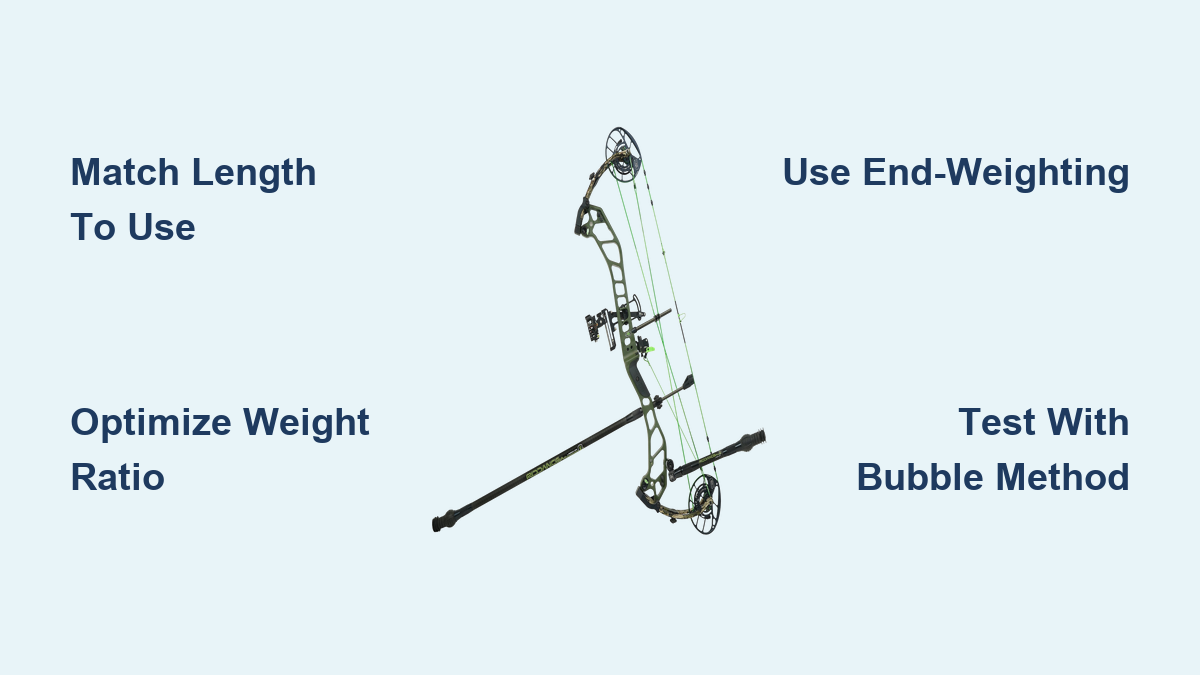
Stabilizers measuring 24 to 30 inches or longer maximize rotational inertia with minimal added weight. Because physics favors distance over mass, a 30-inch rod with 6 ounces of end weight outperforms a 10-inch rod with 10 ounces. These setups are used almost exclusively in target and competitive archery.
The main drawback is impracticality in field conditions. Long rods can touch the ground for shorter shooters and easily catch on brush during hunting. They work best on a target range, not in the field.
Optimize Weight and Balance for Better Shot Consistency

Weight placement matters more than total weight. A stabilizer increases rotational inertia, and physics shows that mass farther from the riser has exponentially greater impact than mass close to the bow.
Front and Rear Weight Ratios
The most effective stabilizer systems use a 3:1 or 4:1 rear-heavy ratio. This means more mass is placed behind the riser than in front. This configuration improves balance, reduces forward tipping, and creates a self-leveling effect at full draw.
A typical hunting setup might include 4 to 6 ounces on the front rod with 8 to 15 ounces on the rear bar. For example, 5 ounces front and 12 ounces rear creates approximately a 2.4:1 ratio, which is close to ideal. Levi Morgan recommends starting with 4 to 5 ounces on the front bar and 10 to 15 ounces on the back bar, then fine-tuning from there.
Why End-Weighting Matters
A 10-inch rod with 5 ounces at the tip provides more stabilization than a 10-inch rod with 5 ounces distributed along its length. The farther the mass is from the bow center of rotation, the more it resists movement. Use disc weights in 1-ounce increments to fine-tune your setup, and avoid overloading the riser with excessive weight that increases fatigue.
Warning: Too much front weight causes the bow to tip forward, forcing you to fight gravity at full draw. This defeats the purpose of adding a stabilizer.
Using the Bubble Test for Side-to-Side Balance
Even small imbalances from sights, rests, and quivers can pull your bow off-center. The bubble level method helps achieve neutral hold. Nock an arrow and draw to full extension, then close your eyes and settle into your anchor before opening them. Check the sight bubble. If it leans left, move the rear stabilizer left. If it leans right, move it right. Always chase the bubble with the back bar.
Pro Tip: Mathews V-bar brackets have click-adjustable settings perfect for micro-tuning balance.
Select the Right Material for Your Needs

The material of your stabilizer affects weight, vibration control, and durability. Each material offers distinct advantages depending on your shooting priorities.
Carbon Fiber for Lightweight Performance
Carbon fiber stabilizers are best for precision shooting, windy conditions, and long-range hunting. They are extremely lightweight, offer excellent vibration dampening, and provide aerodynamic benefits. The Fuse Carbon Blades flex only vertically, which performs exceptionally well in windy conditions.
Carbon fiber absorbs high-frequency vibrations better than metal, making it ideal for hunters who need minimal noise when stalking game. Top picks include the Fuse Carbon Blades, White Car Banette, and CBE TorX.
Aluminum for Durability and Budget
Aluminum stabilizers work well for budget builds and rugged field use. They resist impact damage, cost less than carbon fiber, and their added weight can help balance lighter bows. The downside is that aluminum transmits more vibration than carbon.
The Hoyt Vexor at 8 inches remains popular despite its age because of reliability. If you are hard on your gear and need something tough, aluminum makes sense.
Hybrid and Composite Designs
Many stabilizers combine materials for balanced performance. Carbon tubes with aluminum weights, rubber or gel inserts for noise suppression, and flexible couplers to absorb shock all represent common approaches. The White Car Banette uses Chakras and Center Doink ER for maximum vibration control, which is critical when shooting close to game.
Tune Your Setup for Your Bow Type
Your stabilizer must complement your bow geometry, accessories, and shooting form. What works on one bow may not work on another.
Compound Bow Configurations
Modern compound bows often run front plus backbar setups because reflexed risers create downward torque and heavy accessories pull the bow off-center. A long front rod alone can make the bow feel front-heavy, so adding a rear stabilizer or bottom weight balances the system.
A small weight mounted below the grip on the string side counters downward tipping without adding length. This is ideal for compact hunting rigs where maneuverability matters.
Recurve Bow Setups
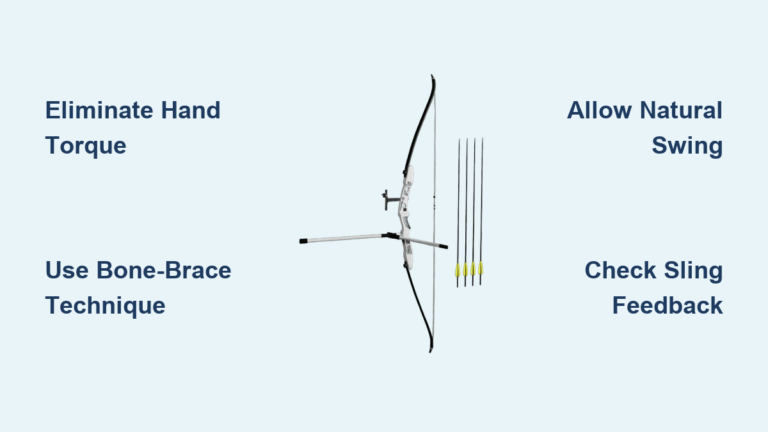
Recurve risers are typically lighter than compound risers, so they need more end-weight up front to achieve stability. Target recurve setups often use 24 to 30-inch front rods. Consider using Gillo Selection Chart for data-driven starting points that match stabilizer specs to draw length and competition class.
Hunting Configurations by Scenario
Different hunting scenarios require different setups. For tree stand hunting with the quiver removed, use an 8 to 10-inch front rod with minimal rear weight. For Western hunting, a 10 to 12-inch rod like the Doinker or Bee Stinger with an optional rear bar works well. For dense cover, use a 6 to 10-inch rod with a side-blade adapter and avoid long bars. For long-range precision, use a front plus backbar system with carbon blades and an adjustable V-bar.
Avoid Common Stabilizer Mistakes
Even experienced archers make mistakes when setting up stabilizers. Avoiding these pitfalls saves time and improves performance.
Do Not Copy Pro Setups
Just because a professional archer runs a 30-inch target bar does not mean it is right for you. Copying elite setups without testing leads to frustration and poor performance. One archer admitted putting target stabilizers on his hunting bow and said, “Looked neat was all.”
Avoid Over-Stabilizing
Too much weight or length increases fatigue, hinders maneuverability, and forces you to change your body position to compensate. If you are adjusting your stance or grip to accommodate the stabilizer, it is too aggressive.
Test Dynamic Balance, Not Static Balance
Static balance with the bow resting on a stand does not reflect shooting reality. You must test at full draw under field conditions. Use the bubble test and shoot at 40 yards or more to evaluate real-world performance.
Prioritize Inertia Over Dampening
While vibration control feels good, rotational inertia is more important for accuracy. A stiff, long rod with end weight does more for consistency than a short, jelly-filled dampener.
Test and Refine Your Stabilizer System
Finding the best stabilizer requires systematic testing. There is no shortcut to optimal performance.
Establish a Baseline
Start by shooting your bow without any stabilizer. Note your pin float pattern, post-shot movement, and vibration in the grip. This reveals your natural shooting behavior before adding any equipment.
Add Front Stabilizer First
Begin with a 10 to 12-inch rod and 4 to 5 ounces of end weight. Shoot 20 to 30 arrows and observe whether the pin settles faster, if vibration is reduced, and if the bow is easier to hold level.
Add Rear or Side Stabilization
If the bow pulls to one side or tips forward, add a rear bar with 8 to 12 ounces of weight. Use a side stabilizer if running a quiver. Re-test using the bubble method.
Field Test Under Pressure
Shoot in wind, from awkward positions, and after hiking uphill to simulate fatigue. Monitor time to settle, group tightness, and noise level. The proof is in your groups, not how it feels after five shots.
Make Small Adjustments
Change only one variable at a time. Adjust one ounce of weight, half an inch in length, or 5 degrees in V-bar angle. Wait at least 20 to 30 shots before judging a change because honeymoon results can mislead you.
Frequently Asked Questions About Choosing a Bow Stabilizer
What length stabilizer do I need for hunting?
For most hunting situations, a 10 to 12-inch stabilizer works well. This length provides a balance of stability and maneuverability. If you hunt in dense cover or from a tree stand, consider shorter 6 to 10-inch models. Western hunters often prefer 10 to 12-inch rods for the added stability during longer shots.
How much weight should my bow stabilizer have?
Most archers find success with 3 to 6 ounces on hunting setups and 6 to 12 ounces on target setups. Start with 4 to 5 ounces on the front bar and 10 to 15 ounces on the back bar, then fine-tune based on your testing. Remember that end-weighting matters more than total weight.
Can I use a target stabilizer for hunting?
You can, but it is usually not practical. Target stabilizers typically measure 24 to 30 inches, which catches on brush and limits mobility. They also make your bow harder to handle in tight spaces. Hunting stabilizers are designed for field conditions.
Do I need a rear stabilizer for my hunting bow?
Many hunting setups benefit from a rear stabilizer or backbar, especially if your bow has heavy accessories like a sight and quiver mounted on one side. A rear bar helps achieve neutral balance and reduces forward tipping. However, some hunters use short front-only setups successfully, particularly in very tight hunting scenarios.
How do I know if my stabilizer is properly balanced?
Use the bubble test. Draw your bow with an arrow nocked, close your eyes, settle into anchor, then open your eyes and check the sight bubble. If it leans left or right, adjust the back bar in that direction. The goal is neutral hold where the bow stays level without active correction from your muscles.
Does stabilizer material really matter?
Yes, material affects performance. Carbon fiber is lighter and dampens vibration better, making it ideal for precision shooting. Aluminum is more durable and affordable, better suited for rugged field use. Choose based on your priorities: weight and vibration control versus durability and cost.
Key Takeaways for Choosing Your Bow Stabilizer
The best stabilizer is the one that helps you shoot tighter groups, stay steady under pressure, and move confidently in the field. Start by testing your bow without any stabilizer to establish a baseline of your natural shooting behavior. Match your stabilizer length to your environment rather than trends. Use the bubble test for side-to-side balance. Prioritize end-weighted rods over heavy short ones. Tune gradually with small changes and let your groups be the judge, not subjective feel.
Do not copy professional setups blindly because your body and bow are different. Invest in adjustability for long-term tuning. Try before you buy at a pro shop if possible. Test in real conditions, not just at 20 yards.
Choosing a bow stabilizer is not about gear, it is about consistency. By understanding the physics of inertia, testing systematically, and tuning to your unique setup, you will transform your bow into a more stable, accurate, and reliable tool for your specific hunting or shooting situation.